5 takeaways from retail leaders on planning for unpredictable demand
by Amy Rosoman on 22 May 2026
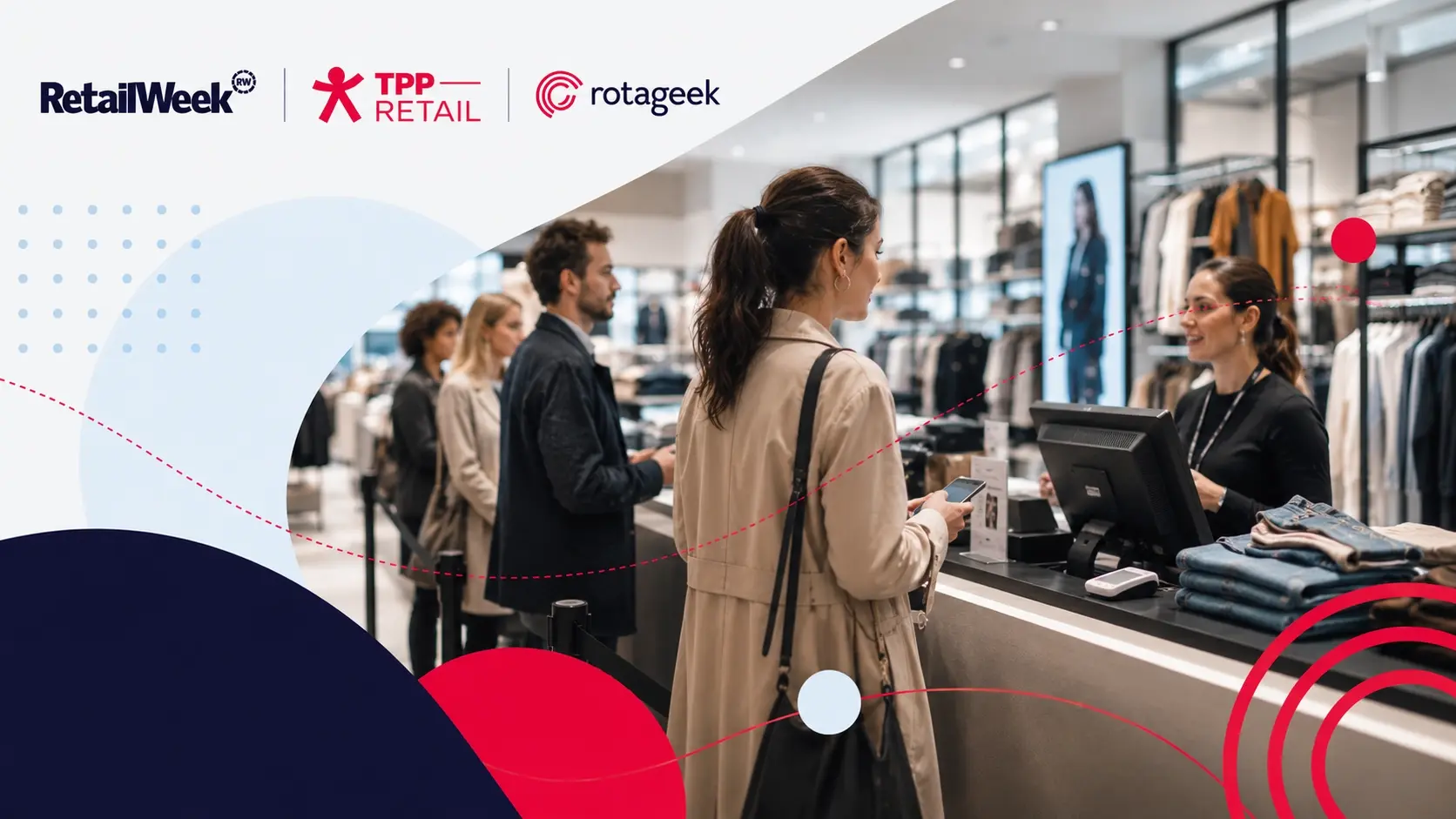
Retail demand has always been difficult to predict. But for many leaders across the retail industry, the challenge now isn’t just bigger peak periods. It’s the growing number of smaller, less predictable spikes happening throughout the year.
During our recent Peak Without Panic webinar, leaders from Rotageek, Retail Week and TPP Retail discussed how retail operations, retail workforce planning and frontline technology are evolving as demand becomes harder to predict.
The discussion explored how retailers are adapting workforce planning, scheduling and store operations as customer demand becomes harder to predict. It also highlighted how technology, forecasting and frontline visibility are becoming increasingly important across the retail industry.
The session also explored how retailers can balance operational efficiency with employee experience, while responding to changing customer expectations and emerging trends across the retail industry.
The conversation also drew on findings from the Talking Shop 2026 report — research from Rotageek and Retail Week exploring the realities of frontline retail work, based on feedback from more than 500 store colleagues across communication, wellbeing, digital adoption and workforce technology.
Here are five of the biggest takeaways from the conversation
Skip to...
1. Retail roles have become significantly more complex
2. Retail peaks are becoming more fragmented
3. Better workforce planning reduces reactive firefighting
4. AI works best when it supports managers, not replaces them
5. Technology adoption depends on frontline trust
Planning for retail’s next phase
1. Retail roles have become significantly more complex
Store teams are managing far more than traditional customer service and tills.
Click-and-collect, fulfilment, self-checkouts, returns and in-store services have all added new operational demands, often within the same shift.
Workforce planning is becoming harder to manage
As Jason Steuber, VP of Customer Operations at Rotageek, explained:
“The gap between what you had planned to happen maybe last week or two or three weeks ago when you built the schedule and what is actually happening in the day is changing at a much faster pace.”
That growing complexity is making workforce planning harder and increasing pressure on frontline teams.
Retail Week’s Ellis Hawthorne pointed to the changing reality inside stores:
“You can really see why that pressure is getting to people and why they feel understaffed and genuinely really stressed out.”
Frontline teams are balancing more operational tasks
Dave Abbott, Technical Director at TPP Retail, also highlighted how much operational pressure now sits with frontline teams:
“Store teams need to respond to demand changes much faster than they did even a few years ago.”
He pointed to the growing number of operational tasks happening simultaneously inside stores, and how modern retail store operations now rely on teams balancing multiple responsibilities at once.
The webinar discussion highlighted that many frontline workers now juggle multiple operational responsibilities at once, often while dealing with tighter labour budgets, customer expectations and rising levels of abuse or shoplifting.
For retailers, the challenge is no longer simply maintaining appropriate staffing levels on shift. It’s making sure teams have the right support, skills and visibility to manage constantly changing demand.
Webinar: Peak without Panic
Moving from reactive to proactive workforce planning in multi-peak retail
Watch on demand
2. Retail peaks are becoming more fragmented
Christmas and Black Friday still matter, but retailers are increasingly dealing with smaller, less predictable “micro-peaks” throughout the year.
Why retail peaks are becoming less predictable
Payday weekends, weather changes, school holidays, local events and social media trends can all create sudden spikes in demand.
Jason described how that shift is changing operational planning:
“Peak isn’t just a couple moments. There’s kind of dozens of them throughout the year and a lot of them are driven by more localised events rather than national events.”
Emerging trends are changing retail planning
Social media is playing a growing role too.
Ellis shared examples of viral trends unexpectedly driving retail demand:
“A recipe will have gone viral and suddenly retailers can’t stock products fast enough.”
Customer behaviour is changing faster
Cultural moments are also increasingly becoming retail moments, influencing shopping habits far more quickly than many retailers are used to. From major tours and sporting events to film releases and online trends, retailers are now responding to demand patterns that can emerge very quickly and disappear just as fast.
Those shifts in customer preferences are making maintaining forecast accuracy significantly harder than it was even a few years ago.
For workforce planning teams, that means forecasting can no longer rely only on historic seasonal peaks. Schedules need to be flexible enough to respond quickly to changing customer demand week by week and sometimes hour by hour.
Retailers are also having to balance historical data with emerging signals around future demand, particularly during periods of economic uncertainty.
3. Better workforce planning reduces reactive firefighting
One of the clearest themes from the webinar was the cost of reactive scheduling.
Reactive scheduling creates operational pressure
Retailers are increasingly relying on last-minute rota changes, gap shifts and overtime to respond to unexpected demand. While these tools are useful, they work best when they support stronger forward planning rather than replace it.
Modern workforce management platforms, like Rotageek, can help retailers reduce reactive scheduling by improving demand forecasting, labour visibility and shift optimisation across locations
As Jason explained:
“Getting in front of the problem by just doing a better schedule in advance is still a really important thing that you can’t ignore.”
Flexible workforce models help retailers adapt faster
The discussion also explored how some retailers are using more collaborative workforce planning approaches across multiple locations.
Gap shift sharing between stores, a more flexible workforce model and retasking staff within larger stores can all help retailers respond more effectively when demand changes unexpectedly.
Tools that support flexible scheduling and real-time shift visibility are helping retailers respond faster to changing customer demand while reducing pressure on frontline teams.
Jason shared how some locations had effectively become “super sharers” for labour support across nearby stores, helping fill staffing gaps during local demand spikes.
In many cases, these approaches are helping retailers make significant improvements in how they allocate labour across locations.
These operational changes may seem small individually, but together they can help improve efficiency, reduce pressure on frontline teams and support great customer service during busy trading periods.
Real-time visibility helps teams adapt
Dave also noted that retailers are increasingly using real-time store data to help teams prioritise tasks more effectively during busy periods:
“Technology in colleagues’ hands can help teams respond faster to what’s actually happening in store day to day.”
That visibility helps teams respond more effectively to actual demand rather than relying solely on static schedules created days or weeks earlier.
Many of these challenges also emerged in the Talking Shop 2026 research, which explored how frontline teams feel about communication, AI adoption, scheduling and operational pressure inside stores.
Talking Shop 2026 Report
What 500 store staff told us about communication, digital & AI adoption, wellbeing and the reality on the shopfloor
Read our report
4. AI works best when it supports managers, not replaces them
The webinar also explored how AI, scheduling technology and workforce management software are evolving.
AI is changing how workforce planning works
While AI is becoming more common across retail operations, the discussion repeatedly returned to the importance of maintaining human judgement within workforce planning.
Jason highlighted an interesting shift in how retailers now describe scheduling technology internally:
“Most customers now call it assisted scheduling rather than auto scheduling.”
That change in language reflects a broader mindset shift.
Technology should support better judgement
Rather than removing managers from decision-making, retailers increasingly want technology to support better decisions by providing stronger forecasting, better visibility and faster operational adjustments.
Better visibility across point of sale activity, staffing patterns and store demand is helping managers make more informed decisions throughout the day.
For many retailers, the focus is now on using technology to support more accurate forecasting and faster operational decision-making.
As Jason explained:
“They want it to feel like a co-pilot. They want it to feel like a helper.”
This distinction matters, particularly for frontline adoption.
Trust matters when introducing AI tools
Retail workers are often far more open to technology when it’s positioned as support rather than surveillance or replacement.
The discussion also highlighted the importance of balancing operational efficiency with employee experience. Scheduling technology may help improve labour optimisation, but it also affects breaks, workload balance and day-to-day pressure inside stores.
For many retailers, the goal is to improve efficiency without creating additional pressure for frontline teams.
5. Technology adoption depends on frontline trust
One of the strongest themes throughout the session was that technology projects succeed or fail based on how well frontline teams are involved.
Frontline involvement improves adoption
Retailers that engage store managers and frontline workers early in implementation tend to see stronger adoption and fewer operational issues later.
Jason described the gap that can sometimes emerge between head office assumptions and store reality:
“There’s the head office view of how stores operate and then there’s the reality of how they actually operate within the physical store.”
Ellis also stressed the importance of communication and involvement when introducing new systems:
“Nobody particularly enjoys having decisions made from the top down and handed to you without understanding why.”
Communication matters during implementation
Several examples during the discussion highlighted the value of store champions, regional super-users and frontline feedback loops during technology rollouts. Showcasing how store teams need visibility and involvement.
Retailers that involve frontline teams earlier in the process often see stronger engagement and smoother adoption across stores.
For retailers, the lesson is clear. Workforce technology isn’t just an operational project. It’s a people project too.
Dave emphasised that adoption depends on whether technology genuinely helps frontline teams in their day-to-day roles:
“If teams aren’t engaged with the technology, they’ll simply ignore it.”
The discussion highlighted how communication, training and frontline involvement remain critical to successful technology rollouts.
Strong communication improves adoption
The retailers seeing the strongest results are often the ones investing as much in communication, training and trust as they are in the technology itself.
Planning for retail’s next phase
Better visibility supports better decisions
Retail operations are becoming harder to predict, not easier.
Demand patterns are fragmenting, frontline roles are becoming more complex, and store teams are being asked to respond faster than ever before.
The retailers adapting best are not necessarily the ones adding the most technology, but the ones using better planning and visibility to support future sales and operational stability. They’re the ones using better data, stronger workforce planning, better demand forecasting and more flexible operational models to support their people more effectively.
Increasingly, that also means investing in workforce management technology that connects forecasting, scheduling and real-time operational visibility in one place — helping managers make faster, more informed decisions during busy trading periods
The retailers responding best to changing demand are often the ones investing in clearer visibility, stronger planning processes and more adaptable operating models.
As the discussion made clear, the goal isn’t removing human decision-making from retail operations.
Workforce planning will continue to evolve
It’s giving managers and frontline teams better tools to navigate increasingly unpredictable environments with more confidence and less firefighting.
As retail demand continues to shift, retailers will need workforce planning models that are more flexible, more responsive and better connected to what is happening inside stores day to day. The businesses adapting most effectively are often the ones combining better operational visibility with practical workforce planning strategies that support both managers and frontline teams
FAQs
What is retail workforce planning?
Retail workforce planning is the process of aligning staffing levels, schedules and labour allocation with changing customer demand across stores and channels.
As retail operations become more complex, workforce planning increasingly relies on forecasting tools, operational visibility and flexible scheduling models.
Why is retail demand becoming harder to predict?
Retailers are now dealing with more fragmented demand patterns driven by social media, weather, local events, school holidays and changing customer preferences.
These emerging trends create smaller, less predictable demand spikes throughout the year rather than a small number of traditional peak trading periods.
How can retailers respond more quickly to demand changes?
Many retailers are using more flexible workforce models, real-time store visibility and assisted scheduling tools to respond quickly when demand changes unexpectedly.
Collaborative labour sharing between stores and improved forecasting can also help reduce reactive scheduling.
How does AI support workforce planning?
AI and workforce management software, like Rotageek, can help retailers improve forecast accuracy, identify staffing gaps and support managers with operational decision-making.
The webinar discussion highlighted that many retailers now prefer the term “assisted scheduling” because technology works best when it supports human judgement rather than replaces it.
Why is frontline adoption important for retail technology projects?
Technology adoption is often strongest when frontline teams are involved early in the implementation process.
Clear communication, training and store-level feedback loops help retailers avoid common pain points and improve long-term engagement with new systems.