Frontline first: Why retail’s most valuable asset is standing on the shop floor
by Andrew Busby on 11 May 2026
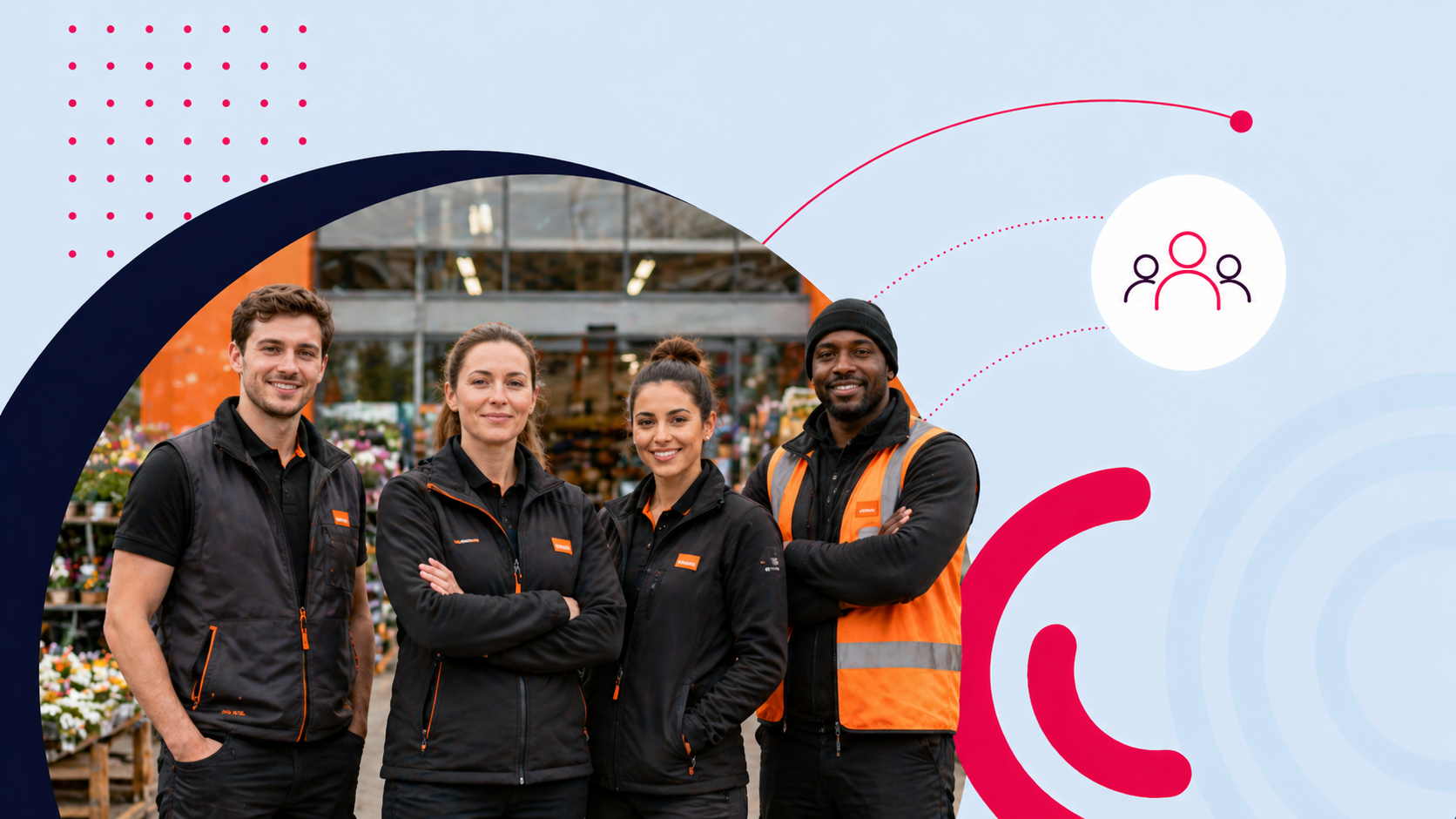
Retail’s turning point: The frontline is the strategy.
This year’s Retail Week Talking Shop 2026 report, in partnership with Rotageek, highlights that the days of treating the frontline workforce as a cost centre are well and truly behind us. By contrast, it’s now retail’s most powerful strategic asset.
Andrew Busby is one of the retail industry’s leading commentators and thought leaders, with more than 25 years’ experience spanning retail operations, technology, customer experience and emerging industry trends. A former retail executive at Kingfisher and Superdrug, he is now founder of Redline Retail Consulting, a retail writer for Fortune, and a regular media contributor and keynote speaker on the future of retail.
In this commentary piece, Andrew shares his perspective on the findings from the Retail Week Talking Shop 2026 report, co-produced with Rotageek, exploring why the frontline workforce has become retail’s most important strategic asset.
The frontline is your brand
As the report reveals, the retailers who are winning are those who are investing in their people, focusing on their stores, and using technology to empower rather than replace. Online is where brands reside on screens, stores are where they come to life. And it’s the frontline workforce who account for this.
Too often, retail is viewed as a transitory career while waiting to find a ‘proper’ job. However, it’s encouraging to see from the report that 80% of workers feel secure in their job, although this could be more a reflection on the fact that a) the larger retailers and grocers employ far more people and b) working for a large tier one retailer in itself brings a degree of job security.
Retail has a career problem and a career opportunity
It’s incumbent on the retail industry to promote itself as a viable long-term career. While the Talking Shop report reveals such a high percentage of frontline workers feel secure in their jobs, only 34% see retail as a good long-term career. Of more concern is that this figure is down from 52% a year ago.
However, the reality today is that retail presents many opportunities to have a wide and varied career. And in many sectors, such as DIY, garden centres or pets, it’s seen as more of a vocational career. With the role of the frontline worker evolving, brought about by technology advances and the need to provide a reason for customers to shop in store, this vocational trend is likely to spread to other sectors. Today it’s not about competing for space, it’s about competing for consumer’s attention.
Key takeaway: those who redefine their retail business as a modern, tech-enabled, people-powered career path will win the talent battle.
The culture shift retail must make: empowerment over control
Retail remains shaped by command and control thinking and siloed decision-making.
The report reveals the cultural challenge which persists:
- 25% of frontline workers say communication from head office is not effective
- 23% don’t feel their views are valued
- In food and grocery, that disconnect rises to 32%
But the report also highlights the retailers breaking that pattern:
- M&S’s Straight to Stuart
- Primark’s FWD Think
- Starbucks’ global video training platform
These initiatives work because they recognise that the people closest to the customer often have the clearest view of what needs to change.
Asda chairman Allan Leighton has gone on record as saying that frontline colleagues understand customer needs and operational problems far better than executives in head offices.
It comes as no surprise that 25% of those 500 frontline workers from the survey research felt that head office communications are not effective. However, it is encouraging that retailers are beginning to invest more in empowering store colleagues.
For example, the deployment of electronic shelf-edge labels (ESL) is now gaining traction as retailers seek to protect margins and strive for efficiency. Grocers such as Sainsbury’s and Asda are trialling the technology and Co-op has announced that it is rolling out ESL across its entire estate.
Key takeaway: those retailers who treat their frontline workers as brand ambassadors will be the winners.
Tech that works with people, not instead of them
AI and digital transformation are reshaping retail at speed - but the frontline is too often left out of the conversation.
The report shows:
- 62% say the right tech improves store operations
- 40% say digital change is too slow or inconsistent
- 44% feel they have no involvement in tech decisions
- 76% would trust AI-driven scheduling
The reality of technology, especially AI and digital adoption in retail, is that it’s non-negotiable. The retailers getting it right are those using tech to remove friction, reduce admin, and free colleagues to focus on customers.
The Currys ‘Action AI’ initiative is a great case in point; by providing store teams with access to insights previously locked in head office, it helps to enable and empower their frontline workforce to deliver exceptional customer service on the shop floor.
AI is now moving from infrastructure-led use cases (eg. demand management, predictive inventory management) into more customer facing scenarios. Tesco are trialing an AI shopping assistant, Visa have launched an agentic commerce tool, and AllSaints are using AI to modernise buying and merchandising.
The Retail Week Talking Shop report highlights that nearly half (44%) of frontline workers say that digital changes in stores are driven from the top without frontline input; this is a missed opportunity.
Retailers are traditionally risk-averse when it comes to introducing not just technology, but any change in the store environment, for fear of upsetting the operational running of the store estate. Therefore, any tech investment must carry low risk, a clear ROI and payback, and be directly linked to key metrics and the pillars of the business.
Key takeaway: AI and digital transformation do not replace the frontline – they enable it.
AI in retail stores: the frontline insights WFM leaders can’t ignore and what to do next
Read one of our AI and tech blogs in this series
Read the blog
Wellbeing is now a commercial necessity
Optimising store workforce scheduling isn’t only about maximising sales and customer experience, but also about employee wellbeing and safety.
Despite the great work of the Retail Trust and the British Retail Consortium, incidents of abuse - either verbal or physical - of frontline store staff, remain alarmingly high. Retailers are obliged to do all they can to protect their frontline staff, whether it be through effective scheduling, training, managerial support or technology such as carrying body cameras.
The report paints a depressing picture:
- 77% of staff experienced intimidating behaviour in 2025
- 23% were physically assaulted
- 28% say incidents are worsening
This is not just a safety issue, it’s a retention issue, a productivity issue, a brand issue and ultimately a customer experience and loyalty issue.
Wellbeing is no longer a CSR initiative; it’s a business-critical metric. And scheduling plays a vital role. The report shows that 71% of staff say rotas are reactive, and that instability directly increases stress, fatigue, and risk.
Key takeaway: Workforce technology is more than an operational tool; it becomes a wellbeing tool.
What retail leaders must do next
Physical retail is experiencing seismic changes; self-checkout, retail media, electronic shelf-edge labels, self-service kiosks, smartshelves, smartcarts are just some examples of how the traditional store model is rapidly changing.
Not only is the frontline retail worker’s role now more critical than ever before, it’s also constantly evolving. New skills are required, whilst at the same time, pressure on margins is more intense than ever.
If retail leaders take one message from the Retail Week Talking Shop report, it’s this:
Your frontline is not a cost – it’s your strategy.
To win in 2026 and beyond, leaders must:
- Invest in frontline empowerment, not just efficiency
- Bring store teams into tech decisions early and often
- Stabilise scheduling to protect wellbeing and performance
- Treat communication as a commercial lever
- Build career pathways that attract and retain talent
- Use AI to augment people, not replace them
Because in the new era of unified and agentic commerce, your people are your most powerful differentiator. And if you’re not serving the customer, you’re serving someone who is.
The Talking Shop 2026 Report
What 500 store staff told us about communication, digital & AI adoption, wellbeing and the reality on the shopfloor
Read our reportFAQs
Why is the frontline workforce important in retail?
The frontline workforce plays a critical role in customer experience, store execution and brand perception. Retail employees are often the people customers interact with most, making frontline teams a key driver of customer loyalty, operational consistency and commercial performance.
How is AI changing the retail frontline?
AI and digital tools are increasingly being used to support retail operations through smarter scheduling, forecasting (using tools like Rotageek), inventory management and store insights. The most effective retailers are using AI to reduce manual admin, improve decision-making and help frontline teams focus more on customer service rather than replacing store colleagues.
Why does scheduling matter for retail employee wellbeing?
Stable and predictable scheduling helps reduce stress, fatigue and operational pressure for retail employees. Reactive rotas and understaffing can affect wellbeing, customer service and retention, while enhanced workforce planning can improve both colleague experience and store performance.