AI workforce management: from reactive to predictive planning
by Annabel Beales on 17 February 2026
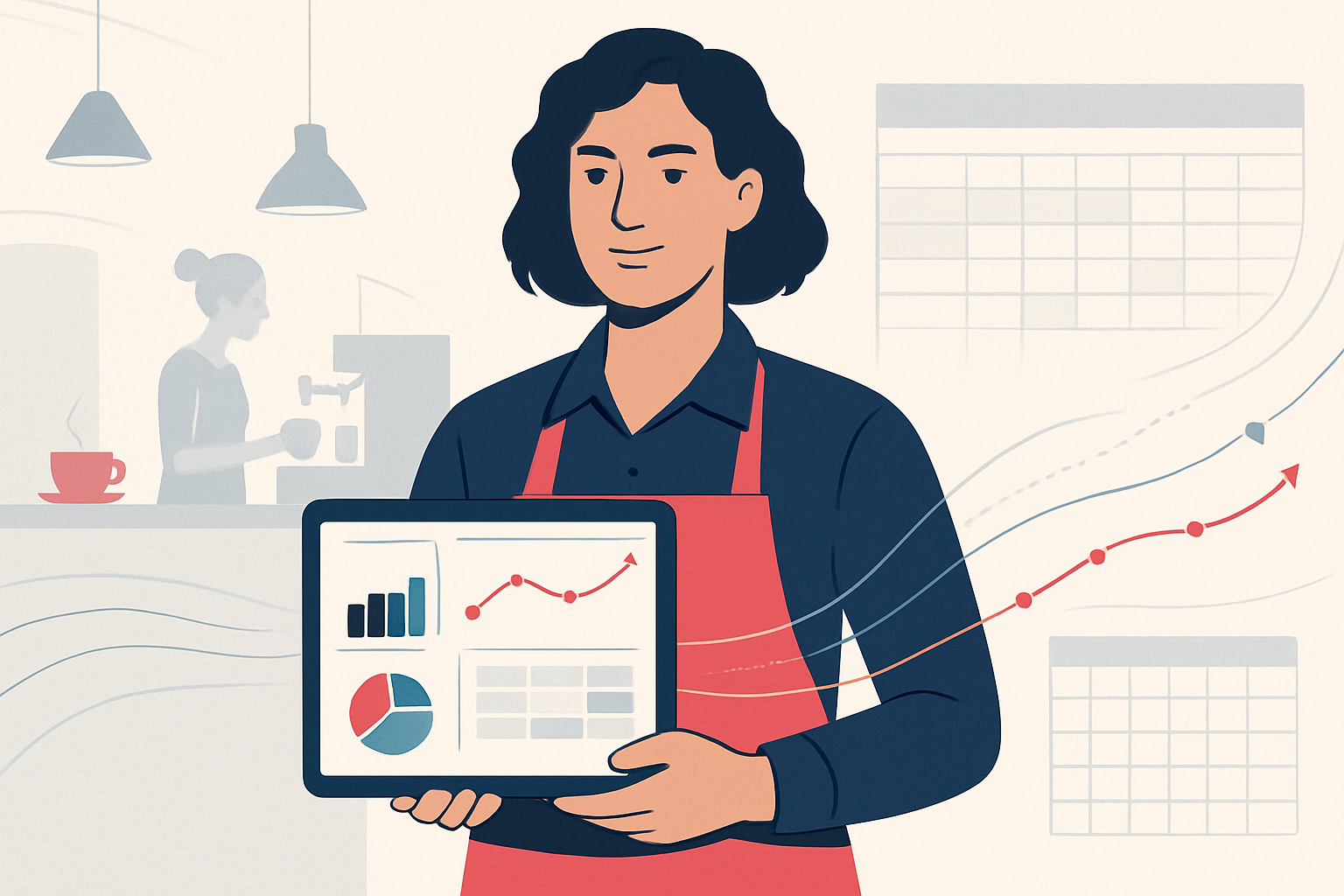
We've covered the workforce trends reshaping retail and hospitality, the shift from rigid rotas to adaptive systems, and the change management that makes transformation stick.
With customer expectations evolving, ongoing labour shortages, and mounting cost pressures, planning teams are navigating an increasingly complex landscape. The need for agility, accuracy and commercial impact has never been greater.
That’s exactly why, last summer, we hosted WFM Fast-Tracked at Thorpe Park - bringing together workforce leaders from across retail and hospitality for a focused, insight-led day centred on the realities of modern frontline operations.
The event welcomed both customers and prospective partners for open, experience-led discussions covering labour optimisation, employee engagement, compliance challenges, and the growing expectation for intelligent, data-driven scheduling. One message came through clearly: workforce planning is no longer simply operational - it plays a direct role in business performance.
To dive deeper into the key conversations and takeaways from the day, you can explore the event highlights here:
Workforce strategy, fast-tracked - discover the key insights
Now, in the final part of this series based on insights from Caffè Nero, William Hill, and The Entertainer, we explore what comes next: how artificial intelligence in workforce management and AI tools are turning adaptability into foresight.
Want to see the rest of the series? Check out the blogs below:
Blog 1 - Ready for anything, or left behind? The workforce trends reshaping retail & hospitality
Blog 2 - From paper rotas to live data: scheduling software in action
Blog 3 - Why workforce management change fails: 5 challenges to solve
Why traditional scheduling no longer works
Retail and hospitality employee scheduling has always looked backwards. You check last week's sales, see what traded well last month, and pull up last year's pattern for the same period - a process that bakes inefficiencies into the new rota.
That worked when trading was stable and teams were bigger, but now, customer behaviour changes faster, demand spikes without warning, and day-to-day disruptions mean yesterday's pattern tells you less than it used to.
From hindsight-based planning to AI-driven foresight
To stay ahead today, leading businesses are using AI-powered workforce management, including an AI scheduling assistant, to plan labour in faster-changing retail and hospitality environments.
Instead of guessing whether Monday will be busy based on three Mondays ago, AI powered scheduling uses demand forecasting algorithms and predictive analytics that factor in weather, local events, app orders, delivery patterns, and trading rhythms across channels, strengthening day-to-day risk management.
The forecast gets sharper, enabling intelligent decisions. With clearer metrics and supporting dashboards, managers gain actionable insights into what's likely to happen before it does, enabling informed decisions that allow teams to stop reacting to what's already happened and start planning for what's coming.
For teams already running adaptive systems, recent advancements in AI are what turn flexibility into genuine foresight. Let’s take a closer look.
How AI workforce management changes planning in retail and hospitality
Why fixed workforce planning breaks down
For years, workforce planning in retail and hospitality meant locking in a staffing model and sticking to it. That rigidity made sense when demand was predictable. It doesn't anymore.
Today's operators are juggling multiple variables at once. During a Rotageek panel, Andy Maynard, IT director at Caffè Nero, described walk-ins, app orders, delivery, and changing customer preferences all happening simultaneously.
Each channel pulls labour in a different direction, and managers are trying to balance them all while keeping teams from burning out.
Planning for complexity instead of predictability
AI workforce management changes how that planning works by aligning staffing needs to real-time trading conditions.
Instead of assuming next Tuesday will look like last Tuesday, the system pulls in real-time data to improve resource allocation: current trading patterns, weather forecasts, local events, and historical data from similar conditions.
It reveals patterns most managers wouldn't have time to spot, , creating a more efficient way to plan labour across channels and days.
From weather-driven footfall changes to event-led demand spikes and the different trading rhythms across channels and days, using machine learning to improve accuracy over time.
Thanks to AI scheduling for retail and hospitality, rotas reflect what's actually happening rather than what happened months ago.
Teams experience fewer mid-shift scrambles when demand spikes and smoother coverage, delivering improved efficiency and giving managers more confidence instead of constantly firefighting.
👉 Download the workforce transformation report
What this means for managers and teams on the ground
Giving managers back time for important work
AI takes repetitive scheduling decisions off managers' plates, which helps save time, create focus time, and streamlines the planning process in environments where most time gets spent on the floor, not in an office.
Andy described it plainly: "You're on the floor because you've got mobile ordering, app ordering, delivery [and ongoing task management]… you don't have the time to sit in the back office doing rotas."
When AI handles the logic through automated scheduling, matching hours to forecast, balancing contracts, applying business rules, flagging gaps, shift swaps, teams get more stable patterns.
Colleagues know what to expect and can plan their lives around it using clearer rotas and shared team calendars, including handling time off requests more predictably, improving the employee experience day to day.
Thomas George, Head of Business Insight at William Hill, was direct about why that matters: "Flexibility is absolutely everything for colleagues." Andy reinforced the human side: "People work blooming hard for us, but they need their time and some patterns."
That stability protects energy and helps boost productivity across teams. When staffing matches demand more closely, shifts flow better, and burnout risk drops. People feel the business is planning with them instead of reacting to whatever crisis has just landed.
Why clean data underpins trust in AI
But these benefits only show up when the data feeding the AI is clean and consistent. Without that foundation, AI adoption stalls as managers lose trust in the outputs.
Indre Lapiene, Reward Manager at The Entertainer, highlighted the reality: "We still don't know what data we could upload. It's like a learning curve."
Good data means better forecasts built on accurate employee availability, reliable time tracking, and managers who trust the recommendations. Poor data means constant corrections and AI that never gets used consistently.
With strong foundations in place, operators can start applying AI to real scheduling challenges - which is exactly what leading brands are already doing.
AI workforce management in action: lessons from leading brands
AI is already changing how operators forecast and schedule, even if adoption looks different across businesses. Here's what that looks like in practice.
Caffè Nero: forecasting that keeps managers customer-facing
At Caffè Nero, managers spend 95% of their time on the ground. Andy explained the challenge: "You're building your teams, you're managing them, you're training them, doing all of the things that you are expected to do, but you don't have the luxury of admin time."
AI-driven forecasting supports managers to stay on the floor while labour aligns with actual demand across walk-ins, app orders, and delivery. When the system handles the scheduling logic, managers focus on coaching teams and serving customers instead of rebuilding rotas, creating a more efficient use of their time.
The Entertainer: stability and consistency across stores
Indre's team uses forecasting tools to build predictable patterns for employees while adapting to peak trading. The system creates consistency and visibility across stores, reducing last-minute changes and helping staff feel more secure in their schedules.
"Staff have power now," Indre explained. "They see what was planned, what their duty manager is expecting to see." AI helps balance fairness with commercial needs, giving teams patterns they can rely on while the business stays responsive to demand.
William Hill: precision that reduces errors
Thomas described how forecasts and patterns are now more closely aligned to trading rhythms rather than static assumptions. The impact was immediate: "The amount of errors... was enough to pay for the whole project by itself."
That level of precision improves service, strengthens the customer experience, and supports cost savings by aligning colleague hours more closely with real demand.
The shift from twice-yearly planning to data-led flexibility has delivered measurable benefits at William Hill - fewer mistakes, tighter cost control, and rotas that reflect what's actually happening.
These examples show AI is already transforming planning in retail and hospitality. But the real opportunity sits in what comes next: using AI to build workplaces that feel fairer and more sustainable for the people doing the work.
👉 Check out Rotageek's AI and automation - Auto Scheduler
What fair, flexible scheduling looks like in an AI-enabled future
Predictability that supports work life balance
AI workforce management is about creating workplaces where teams get predictability, fairness, and more control over their working lives - without forcing businesses to sacrifice operational flexibility.
Operators increasingly need tools that protect team energy and reduce burnout risk. When forecasts are accurate and staffing flexes with customer demand, staffing levels stay balanced and colleagues aren't stretched one shift and overstaffed the next.
They get clearer expectations of upcoming shifts, fewer last-minute changes, and rotas that feel fairer.
Stability without sacrificing flexibility
AI makes this possible by adapting to real-time conditions while still providing stable patterns. Teams can build their lives around work schedules instead of constantly adjusting to last-minute changes.
Andy saw where this leads - creating space to retain skills, develop people, and give the best team members a path through the business: "Holding on to the best team members and giving them a path through the business… that's where we can start to get really smart."
The result is work that feels more sustainable, with better service because teams have the energy to deliver it, and stronger retention and lower attrition because people feel supported rather than stretched.
This creates a foundation that supports long-term business growth and evolving business goals without burning through the workforce.
That future is already taking shape in businesses using AI to plan smarter. For leaders starting their own journey, the next section offers a practical checklist for getting there.
Getting started with AI workforce management - checklist
AI workforce management delivers the strongest results when operators approach it with clarity, clean data, and collaborative change. Here's a practical checklist for leaders taking the first steps towards data-driven workforce planning.
1. Get clear on the problem AI should solve
Is the priority accuracy, predictability, wellbeing, cost control, visibility, time back for managers - or a combination of these? Clarity prevents teams from applying AI to broken or inconsistent processes. Start with the outcome you need, then work backwards to how AI supports it.
2. Strengthen the data foundations
AI only delivers foresight when the inputs reflect real trading conditions and align with internal policies. Inconsistent data leads to inaccurate forecasts, so prioritise clean, consistent contract data, up-to-date availability, reliable sales feeds, event and channel inputs, and compliance with labour rules.
3. Bring managers in early
Align AI-enabled scheduling with real-world workflows. Use frontline feedback to build trust and credibility. When managers understand how the system works and why it helps them, adoption speeds up.
4. Start with assisted automation, not full automation
Begin by supporting decision-making with an AI scheduler rather than replacing it. Teams build confidence faster when they see AI recommendations first, then gradually lean on them more as trust grows.
5. Iterate with frontline feedback
Use real shifts, real patterns, and real exceptions to refine the model. Treat it as a living system, not a one-off switch, and track outcomes over time. The businesses seeing the strongest results review, adjust and improve continuously.
When operators approach AI workforce management with clarity, clean data, and collaborative change, they unlock faster adoption, fairer rotas, stronger forecasting, and teams who feel more supported in the rhythm of daily work.
The shift to foresight - and what comes next
AI workforce management is about giving operators the foresight, accuracy, and predictability they need to run fairer, more resilient teams while supporting wider business goals in complex, fast-moving environments.
The Entertainer, Caffè Nero, and William Hill show that when AI is paired with good data, strong change management, and frontline involvement, it becomes a practical enabler of better decisions and calmer, more confident daily operations.
With AI, businesses can move beyond reactive scheduling towards a model where demand, wellbeing, and service quality are all better aligned - creating workplaces that feel more balanced for teams and more sustainable for leaders.
The platform behind the shift to AI workforce management
The shift towards AI workforce management reflects a broader evolution in workforce management solutions and traditional workforce management software, as operators look for tools that can handle real-world complexity at scale.
Rotageek was built to solve the workforce challenges where the cost of getting it wrong is highest.
Originally developed in the NHS to manage complex staffing under extreme pressure, its AI engine now powers workforce management for some of the UK’s largest and most operationally demanding brands - including William Hill, Co-op, The Entertainer, Lush, and Merlin Entertainments.
Rotageek uses AI-driven forecasting and scheduling to match people to real demand. That means:
-
Fairer, more predictable rotas for teams
-
Stronger cost control for leaders
-
Shared visibility across operations, finance, and human resources teams
-
And faster, calmer decisions on the ground
See how Rotageek helps multi-site brands move from reactive scheduling to adaptive, AI-supported workforce management. Book a demo to explore what foresight could look like in your operation.
Or, download the full Ready for Anything report for deeper insight from William Hill, Caffè Nero, and The Entertainer.
👉 Download the workforce transformation report