5 ways to improve retail employee engagement - and drive business performance
by Amy Rosoman on 12 May 2026
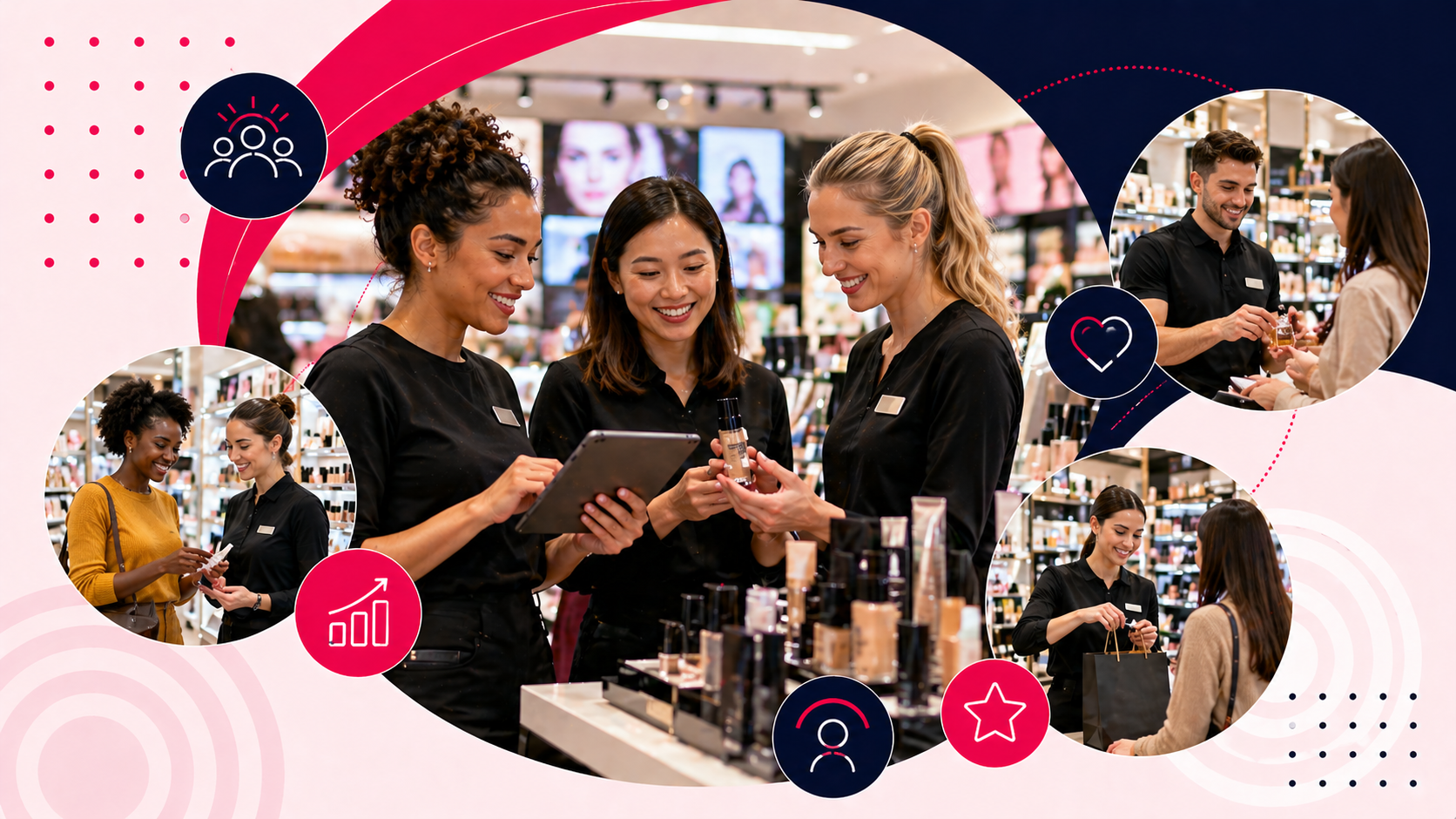
Frontline store teams are dealing with more change than ever. Rising crime, cost of living pressure, fast-moving technology, and new expectations around service and experience.
The question for retail leaders isn’t whether the shopfloor has an opinion on all this, but how that insight makes its way into day-to-day decisions.
To understand what's really happening on retail’s frontline, we partnered with Retail Week on the Talking Shop 2026 report, a survey of 500 UK retail frontline workers across multiple sectors. You can read the full findings in the Talking Shop 2026 report, in partnership with Retail Week.
Skip to:
The reality of frontline staff in retail operations
Why employee engagement matters for store performance and retention
1. Build real listening infrastructure between head office and the shopfloor
2. Co-design change and technology with colleagues to boost employee engagement
3. Use retail scheduling to improve employee wellbeing, retention and engagement
4. Give retail employees the data they need for better decision-making and performance
5. Reward and develop retail staff to improve engagement and retention
From frontline voice to employee engagement and stronger store performance
The reality of frontline staff in retail operations
The headline is clear. Communication and engagement remain a challenge across the shopfloor.
- 25% of frontline workers say communication from head office is ineffective
- 23% say their views are not valued by the wider business
- 44% say digital change in stores is driven from the top, without frontline input. Notably, this rises to 51% among 16-35 year olds
This goes beyond employee engagement. When communication breaks down and engagement is low, it becomes harder to deliver consistent customer service, maintain service quality and drive strong store performance.
Why employee engagement matters for store performance and retention
The good news is that the research also points to clear, practical levers leaders can pull.
Below, we share five ways to turn frontline wisdom into measurable business results, drawing on the first-hand research from the Talking Shop 2026 report.
For retail businesses, employee engagement is closely tied to business performance, customer satisfaction and staff retention. When colleagues feel heard, supported and able to contribute, stores are better positioned to deliver consistent service and stronger results.
Let’s take a closer look at the five actions you can take away.
1. Build real listening infrastructure between head office and the shopfloor
Why communication isn’t working as well as it could
Effective internal communication is the foundation of employee engagement. Without open communication and clear information sharing, it becomes harder for retail staff to communicate effectively, raise pain points and contribute to continuous improvement.
Most retailers have some form of survey or annual engagement process. Yet a growing minority of frontline staff say the way communication flows between head office and stores isn’t working.
- 25% of frontline workers say communication from head office is ineffective, up from 14% in 2024
- Almost a quarter, 23%, say their views are not valued by the wider business, even though this has improved from 33% a year earlier
Anonymous comments from the survey highlight a clear theme: employees are looking for stronger dialogue with senior leadership, more consistent access to technology, and clearer channels where issues can be raised and acknowledged and “guaranteed to be seen.”
Retail examples of listening in action
M&S – ‘Straight to Stuart’
When Stuart Machin became the retailer’s chief executive, he launched ‘Straight to Stuart’, an initiative that lets any colleague submit ideas for product and store improvement directly to him. He also appears regularly on internal channels and message boards, responding to feedback, including the challenging kind, so people can see their views are heard at the very top.
Asda’s huddles and suggestion forums
Earlier in his career, Archie Norman, chair of M&S, introduced daily huddles at Asda. These brought managers and staff together for quick, collaborative problem solving instead of rigid weekly meetings. He also opened up a staff suggestion forum and personally replied to thousands of messages, narrowing the gap between head office and the frontline.
What retail leaders can do to improve employee feedback and communication
- Move from one-off surveys to always on listening channels, like digital suggestion hubs, regular store forums and open Q&A sessions
- Close the feedback loop by regularly sharing “you said, we did” stories to build trust
- Make sure every colleague, not just managers, has the basic tech access they need to participate
When people can see that raising issues and ideas leads to tangible change, they're more likely to keep speaking up and to put their energy into making improvements stick.
Frontline first: Why retail’s most valuable asset is standing on the shop floor
Read retail expert Andrew Busby's Talking Shop 2026 report commentary
Read the blog
2. Co-design change and technology with colleagues to boost employee engagement
Why this matters for retail technology and employee experience
The Talking Shop 2026 data suggests frontline workers aren’t anti-technology. 62% agree that having the right technology in place would improve store operations, and 87% expect more technology in stores in the future. The challenge is how that technology is introduced and used day to day.
Engaged employees are more likely to adopt new tools, support change and contribute to a collaborative team culture across the retail business.
Right now:
- 44% of frontline employees say digital change in stores is driven from the top, without their input - this jumps to 51% among 16-35 year olds
- 34% worry that technology could replace parts of their role
- 17% say the technology introduced so far hasn't meaningfully improved how they do their job
The research highlights a clear distinction between technology that feels imposed on the frontline and tools that genuinely support them.
Case studies: technology that works with the frontline
JD Sports – tech that actually helps colleagues
JD Sports is rolling out RFID inventory software across its estate, starting in Europe. During the pilot, the retailer reported a 12% increase in on-shelf availability and a 20% improvement in restocking speed.
Crucially, both JD Sports and its technology partner highlighted how easy the system was to use and adapt to store needs, ensuring it supported rather than disrupted day-to-day operations.
The Entertainer – AI-powered workforce management and scheduling
Managers at The Entertainer get better visibility of labour demand, staffing levels and employee schedules through Rotageek, while colleagues can swap shifts and manage availability through its mobile app. That combination of visibility and flexibility has helped create a more transparent, collaborative relationship between store teams and leadership.
“Rotageek has made a massive difference for us. Scheduling used to be a real headache — time-consuming and hard to keep on top of when things changed last minute. Now it’s quick, flexible, and easy to use. Our managers love how much time it saves, and our teams really appreciate being kept in the loop.”
— Indre Lapiene, Reward Manager, The Entertainer
What leaders can do to improve adoption and reduce unnecessary labour costs
Involve store colleagues early in the process and technology decisions, and take the time to clearly explain the “why” behind any changes and what they mean in practice for employees. Use pilot phases to refine tools, training and support based on real feedback. When employees help shape their tools, they’re far more likely to use them - and use them well.
3. Use retail scheduling to improve employee wellbeing, retention and engagement
The impact of employee schedules on wellbeing and work-life balance
If you ask store teams where they feel the most impact of operational decisions, scheduling is near the top of the list.
Unpredictable shift patterns, long shifts and last-minute changes can negatively impact employee wellbeing, employee satisfaction and staff retention.
The research shows that 71% of frontline workers describe scheduling as reactive, often shaped by last-minute changes and fluctuating staffing levels. This can impact service quality and customer experience, while unpredictable employee schedules make it harder for teams to balance personal commitments, evening shifts and overall work-life balance.
Smarter retail employee scheduling and workforce planning
Flexible schedules, shift swapping, visibility of employee availability and better access to schedules help to give employees more control. 76% of frontline workers say they would trust AI or intelligent scheduling, at least in some form. Employees aren’t rejecting smarter scheduling; they’re asking for it to be done with them, not to them.
Retail scheduling examples
Lush – digital scheduling aligned to experience-led stores
As Lush has redesigned its stores around more immersive, experience-led formats, it has also moved away from manual scheduling processes. By introducing digital workforce management and a colleague app through Rotageek, store teams now have full visibility of their schedules, along with the ability to swap shifts, request leave and manage availability more easily.
At its Birmingham flagship, this approach contributed to an 8% reduction in staff costs and a 16% increase in productivity within a single quarter - showing how better scheduling can support both employee experience and operational efficiency.
Lush - a fresh approach to scheduling
Read the case studyThe Entertainer – scheduling as a trust builder
The Entertainer uses Rotageek’s AI-powered forecasting and scheduling to better align labour with demand across its store and wholesale operations. Colleagues can manage their shifts through a self-service mobile app, giving them more control and flexibility.
That combination of transparency and flexibility has helped strengthen trust between leadership and frontline teams, while ensuring staffing is better aligned to peak periods and business needs.
What leaders can do to improve scheduling and employee experience
Moving away from spreadsheets and manual scheduling towards more advanced, data-driven tools can help improve staffing levels and efficiency. Giving employees access to schedules, open shifts and shift swapping provides greater flexibility and transparency, while ensuring compliance with legal requirements where needed.
Scheduling isn’t just an efficiency lever - it also plays a key role in supporting employee wellbeing and safety. Control over time is one of the most tangible forms of empowerment for frontline teams, helping to improve morale, strengthen retention and support business continuity.
4. Give retail employees the data they need for better decision-making and performance
Why listening alone isn’t enough
Even the best listening channels can fall flat if store teams don’t have the information they need to act on what they're seeing day to day.
Access to relevant data helps retail employees understand performance, align to sales goals and contribute to higher productivity across retail stores.
In many retailers, performance and trading data still sit mainly at head office. Store managers and colleagues are left reacting to instructions, rather than owning the insight that would help them change course.
Supporting store managers with data-driven decision making
Currys – ‘Action AI’ for store managers
Currys offers a strong example of how better access to data can support frontline decision-making.
In 2025, the retailer launched Action AI, a tool designed to make business-critical data easier for store leaders to access and act on. Instead of working through complex spreadsheets, managers can quickly see which product categories are underperforming and drill into root causes using real-time transaction data and comparisons with top-performing stores across the estate.
As Currys’ Chief Operating Officer, Lindsay Haselhurst, put it, the tool helps “cut through the mountain of data,” enabling store teams to focus on what they do best: helping customers with their tech needs.
This brings frontline insight into action - not just feeding information upwards, but giving store teams the same visibility used to run the wider business.
What leaders can do to improve operational efficiency
Share store and category performance data in simple, actionable formats, combine it with frontline feedback, and support teams in interpreting what it means in practice. When teams understand the bigger picture, their suggestions become sharper and more commercially grounded.
5. Reward and develop retail staff to improve engagement and retention
Why employee satisfaction and progression matter
Shop-floor voices only feel valued when they’re reflected in how people are recognised, rewarded and developed. Opportunities for career growth and ongoing learning play a key role in building long-term engagement.
The Talking Shop 2026 data shows a mixed picture - while 80% of frontline workers feel secure in their roles, only 34% see retail as a strong long-term career option.
Case studies: sharing value and building expertise
Wickes – sharing wins with employees
In 2025, DIY retailer Wickes announced that colleagues would share in a £14.1m pot through a three-year save-as-you-earn scheme, following a 124% increase in its share price. Around 1,000 employees took part, with average monthly savings of £199 growing to more than £16,000 at maturity.
Leadership explicitly linked these outcomes to colleague contribution and performance, reinforcing a clear connection between individual effort and business success.
Holland & Barrett – investing in expertise
Holland & Barrett has increased its investment in colleague training, introducing a 12-week, externally accredited programme to build expertise across multiple areas of wellness.
This shift moves frontline roles beyond purely transactional tasks, positioning employees as trusted advisors and enabling them to deliver more informed, experience-led customer interactions - improving both customer experience and job satisfaction.
What leaders can do to improve retention and job satisfaction
Aligning recognition and reward with frontline contribution, from operational improvements to customer outcomes, making progression paths more visible, and investing in training, skills and development can make a real difference.
Treating development and progression as a core part of your employee voice strategy, rather than a separate initiative, is key. When people can see a clear future, they’re much more likely to stay, engage and grow with the business.
From frontline voice to employee engagement and stronger store performance
Frontline workers are clear about what they need: a say in decisions, access to the right tools, and more predictability in how and when they work.
Turning that insight into action is where impact happens. Across this series, we explore five practical ways retailers are responding:
The five steps above offer a practical way forward:
1. Build real listening infrastructure
2. Co-design change and technology
3. Give teams the data they need
4. Use scheduling as a level of control
5. Reward and develop the people driving performance
Each of these areas is explored in more detail in the chapters that follow — showing how retailers are putting these ideas into practice, and what it means for engagement and store performance.
As stores become more tech-enabled and experience-led, the retailers that succeed will be those who treat frontline colleagues as partners in change - not just recipients of it.
Talking Shop 2026 Report
What 500 store staff told us about communication, digital & AI adoption, wellbeing and the reality on the shopfloor
Read our reportFAQs
Why is employee engagement important in retail?
Employee engagement plays a direct role in retail performance, customer experience and staff retention. When frontline employees feel heard, supported and involved in decision-making, stores are better equipped to deliver consistent service, adapt to change and improve operational efficiency.
How can retailers improve communication between head office and store teams?
Retailers can strengthen communication by creating always-on feedback channels, such as digital suggestion platforms, regular store forums and open Q&A sessions. Sharing clear “you said, we did” updates also helps build trust and shows frontline teams that their feedback leads to action.
How does retail scheduling impact employee wellbeing and retention?
Scheduling has a major influence on employee wellbeing, work-life balance and job satisfaction. More flexible, transparent scheduling — including shift visibility, availability management and shift swapping — helps employees feel more in control, while also improving staffing efficiency and store performance.