
Employment Rights Act 2025: every change, date by date
The biggest update to UK workers' rights in years is arriving in stages. Here's what has already changed, what lands in 2027 and what is still waiting for a date, with what each one means for your rota.
Last updated Wednesday 18 November 2026 · Checked against the GOV.UK timeline of 5 November 2026 and Acas guidance of 12 November 2026
The Employment Rights Act 2025 became law on 18 December 2025. Its changes arrive in phases: day-one sick pay and new family leave rights from April 2026, longer tribunal time limits and a stronger harassment duty from October 2026, and unfair dismissal protection after six months from 1 January 2027.
Rights to guaranteed hours, reasonable shift notice and pay for short-notice changes don't have a start date yet.
Key dates at a glance
-
April 2026
Sick pay from day one
-
October 2026
6-month tribunal limit, harassment duty
-
1 January 2027
Unfair dismissal after 6 months
-
March 2027
Fire and rehire protections
-
April 2027
Bereavement leave, action plans, £13.21 wage floor
-
October 2027
Flexible working, pregnancy protection
-
To be confirmed
Guaranteed hours, shift notice, short-notice pay
What it means for your rota
For colleagues, the changes mean more notice of their shifts, contracts that match the hours they actually work and more protection when they're working late. For workforce management leaders, they mean planning further ahead, budgeting for higher wages and late changes, and keeping the records behind every decision, often before the final rules are set.
-
Late changes will start to cost money
When short-notice pay arrives, a cancelled shift costs more than goodwill. A better forecast means fewer late changes.
Read why forecasting matters now → -
Contracts need to match what people work
Guaranteed hours offers are expected to follow real working patterns, not contract labels, even if you don't use zero-hours contracts.
See what it means for shift operations → -
Every hour costs more from April
The wage floor rises to £13.21 an hour on 1 April 2027. Model next year's labour budget site by site, not with an average uplift.
Plan for the National Living Wage rise → -
Late shifts need a second look
The harassment duty covers customers too. Who's on shift at closing time is now part of how you meet it.
Review the 6 rota decisions →
Employment law changes already in force in 2026
These already apply. If your rota, absence or records process hasn't caught up yet, start here.
| Date | What's changing | What it means for your rota |
|---|---|---|
| 6 April 2026 | Statutory Sick Pay is paid from the first day of sickness, and the lower earnings limit is removed. | Short absences cost from day one. Accurate absence records matter more for payroll and cover planning. |
| 6 April 2026 | Paternity leave and unpaid parental leave become day-one rights. | New starters can take leave straight away, so plan cover for them too. |
| 6 April 2026 | The maximum protective award for collective redundancy consultation failures increases. | Mainly a policy point for HR. Little day-to-day effect on the rota. |
| 6 April 2026 | Sexual harassment becomes a protected disclosure for whistleblowing. Gender pay and menopause action plans can be published voluntarily. | A chance to test your action plan before it becomes mandatory in April 2027. |
| 6 April 2026 | Employers must keep records of annual leave and holiday pay for at least 6 years. | Keep holiday requests, approvals and holiday pay in one place, so the records are easy to find if the Fair Work Agency asks. |
| 7 April 2026 | The Fair Work Agency is set up to enforce rights such as holiday pay, minimum wage and sick pay. | Holiday, hours and pay records are more likely to be checked. |
| 1 October 2026 | The time limit for most employment tribunal claims rises from 3 months to 6 months. | Keep rota history, shift changes and absence data easy to pull for longer. |
| 30 October 2026 | Employers must take all reasonable steps to prevent sexual harassment, including harassment by customers and other third parties. | Review who works late shifts, lone working and staffing at higher-risk times. |
| February to October 2026 | Trade union changes: simpler recognition, e-balloting, stronger access rights and protections for union reps. | Mainly an employee relations point. Check your policies with HR. |
New employment laws in 2027: what's coming and what's expected
Some 2027 changes have a month. The ones that affect shift work most still don't. We'll update this table as soon as the government confirms them.
| Date | Status | What's changing | What it means for your rota |
|---|---|---|---|
| 1 January 2027 | Date set | Unfair dismissal protection starts after 6 months' employment instead of 2 years, and the cap on compensation is removed. | Early reviews and probation decisions need clear records from the first months. |
| 1 January 2027 | Date set | Tipping law tightens, with more required in written tip allocation policies. Employers must tell workers about their right to join a union. | Hospitality teams: check how tips are shared across shifts. |
| March 2027 | Date set | Fire and rehire protections: dismissing someone for refusing a change to core terms, such as pay, hours or shift patterns, becomes automatically unfair in most cases. | Changing contracted hours or shift patterns will need agreement, so set them right from the start. |
| 1 April 2027 | Related | The National Living Wage rises to £13.21 an hour (Autumn Budget 2026, not the Act). | Every hour on the rota costs more. Match hours to demand more tightly. |
| April 2027 | Date set | Statutory bereavement leave, including pregnancy loss. Gender pay and menopause action plans become mandatory for private and voluntary sector employers with 250+ employees (public sector employers from March 2027). New collective consultation thresholds. | Build bereavement leave into absence types and cover planning. |
| September 2027 | Date set | Regulations to stop the misuse of non-disclosure agreements in harassment and discrimination cases. | A policy point for HR and legal. |
| October 2027 | Date set | Stronger dismissal protection for pregnant women and new mothers. Flexible working: employers must show that refusing a request is reasonable. | Expect more requests where shift patterns already vary, and keep records of how each decision was made. |
| December 2027 | Date set | Regulation of umbrella companies. | Check how agency and umbrella workers are supplied to your sites. |
| To be confirmed | No date yet | Right to guaranteed hours: zero-hours and low-hours workers, including agency workers, offered a contract that reflects the hours they regularly work over a reference period. | Compare contracted hours with hours actually worked, person by person. |
| To be confirmed | No date yet | Right to reasonable notice of shifts, and of any changes or cancellations. | Rotas will need to go out further ahead. Track how many days' notice teams get today. |
| To be confirmed | No date yet | Right to payment when a shift is cancelled, moved or cut short at short notice. | Late changes start to cost money. Better forecasting means fewer of them. |
Latest government update, 22 October 2026: fire and rehire moved to March 2027, and the zero-hours rights no longer have a date.
Dates come from the GOV.UK implementation timeline (updated 5 November 2026) and can still move. See all sources
What could last-minute rota changes cost you?
Short-notice pay for cancelled, moved or cut-short shifts doesn't have a start date yet, but you can size it now.
Answer eight quick questions about your sites and late changes to get a ballpark figure, and see what better planning could save.
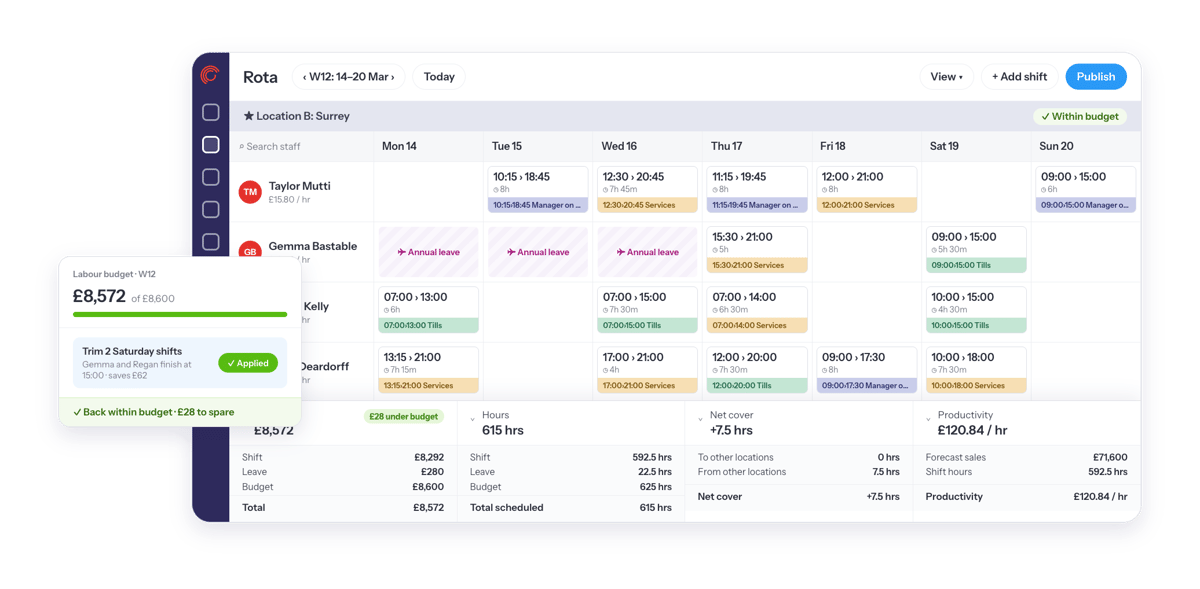
How Rotageek helps you prepare
Forecasting, scheduling, time and attendance, leave and pay sit in one platform, so each change lands where your managers already work.
-
Shift notice and late changes
Demand forecasting predicts demand down to 15 minutes, and rota building lets managers publish weeks in advance, with notifications by app, email or SMS.
Explore demand forecasting → -
Short-notice cover
Flexible staffing offers open shifts to qualified colleagues in the app, with working time rules still checked.
Explore flexible staffing → -
Guaranteed hours
Each person's hours add up against their contract as the rota is built, so gaps between contracts and real hours are easy to spot.
Explore rota building → -
Working time rules
Rules and compliance checks rest, shift length, days worked and breaks, set by person, site, contract or age, before the rota is approved.
Explore rules and compliance → -
Late shifts
Skills and tasks make sure trained people are on each shift, and auto-scheduling shares lates and weekends fairly.
Explore skills and tasks → -
Day-one sick pay
Leave and absence records sickness and unplanned absence in one place, so managers can find cover fast.
Explore leave and absence → -
Records
Time and attendance confirms who clocked in and where, and signed-off timesheets stay closed for audit.
Explore time and attendance → -
Rising wage costs
With the National Living Wage at £13.21 an hour from 1 April 2027, labour budgets put the budget in front of managers while they plan, and pay rules code overtime and premiums.
Explore labour budgets → -
Flexible working
The employee app lets colleagues share availability, swap shifts and request leave from their phone.
Explore the employee app →
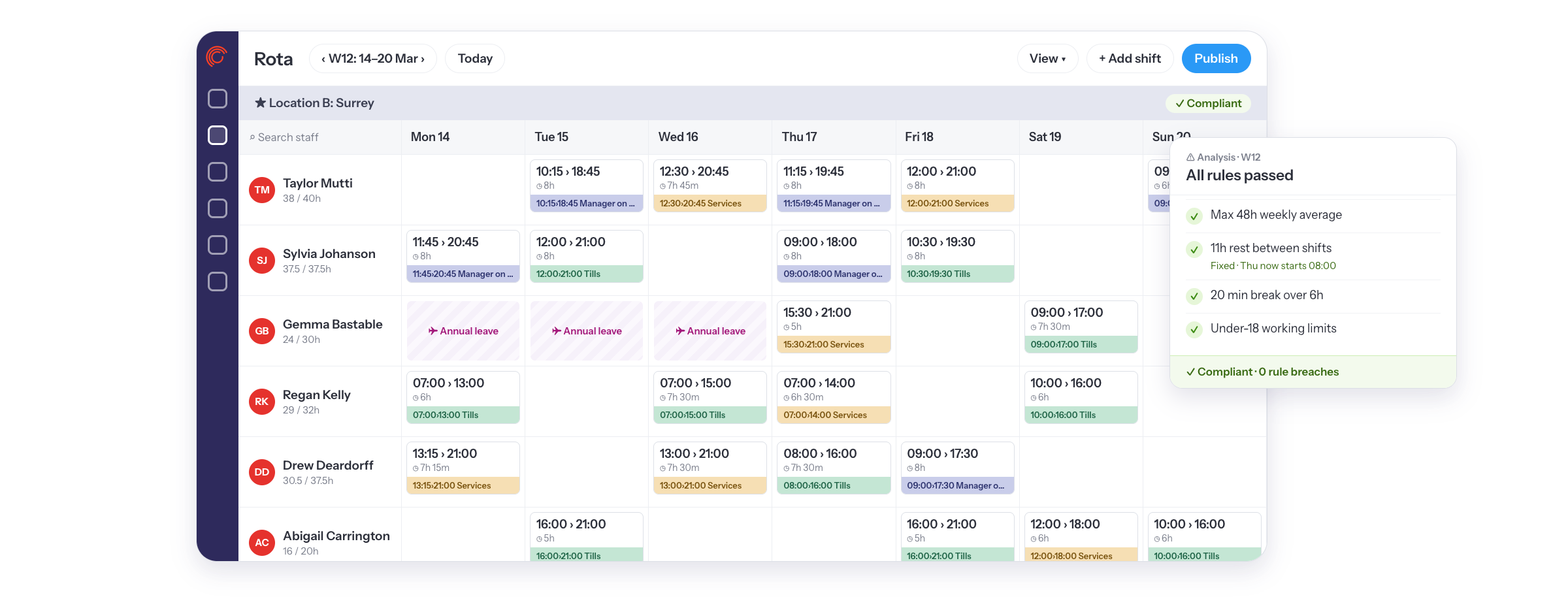
Teams already working this way
These customers weren't preparing for the Act. They show what the habits it asks for look like on a real rota.
-
West Lothian Council: shift notice
The rota is already built out to December 2027, so managers see months ahead rather than week to week. Colleagues get shift notifications on their phone, and 99.8% of clock-ins happen through the app.
Read the West Lothian Council story → -
Pets at Home: rules and cover
Schedules automatically reflect colleague availability, leave and company policies, and managers can create a rota in as little as 10 minutes. More than 85,000 gap shifts have been filled through Rotageek.
Read the Pets at Home story → -
Oseyo: one set of records
Payroll, HR and operations now see the same workforce data, and more than 99% of clock-ins are recorded through the app. All 20 stores went live in 12.5 weeks.
Read the Oseyo story →
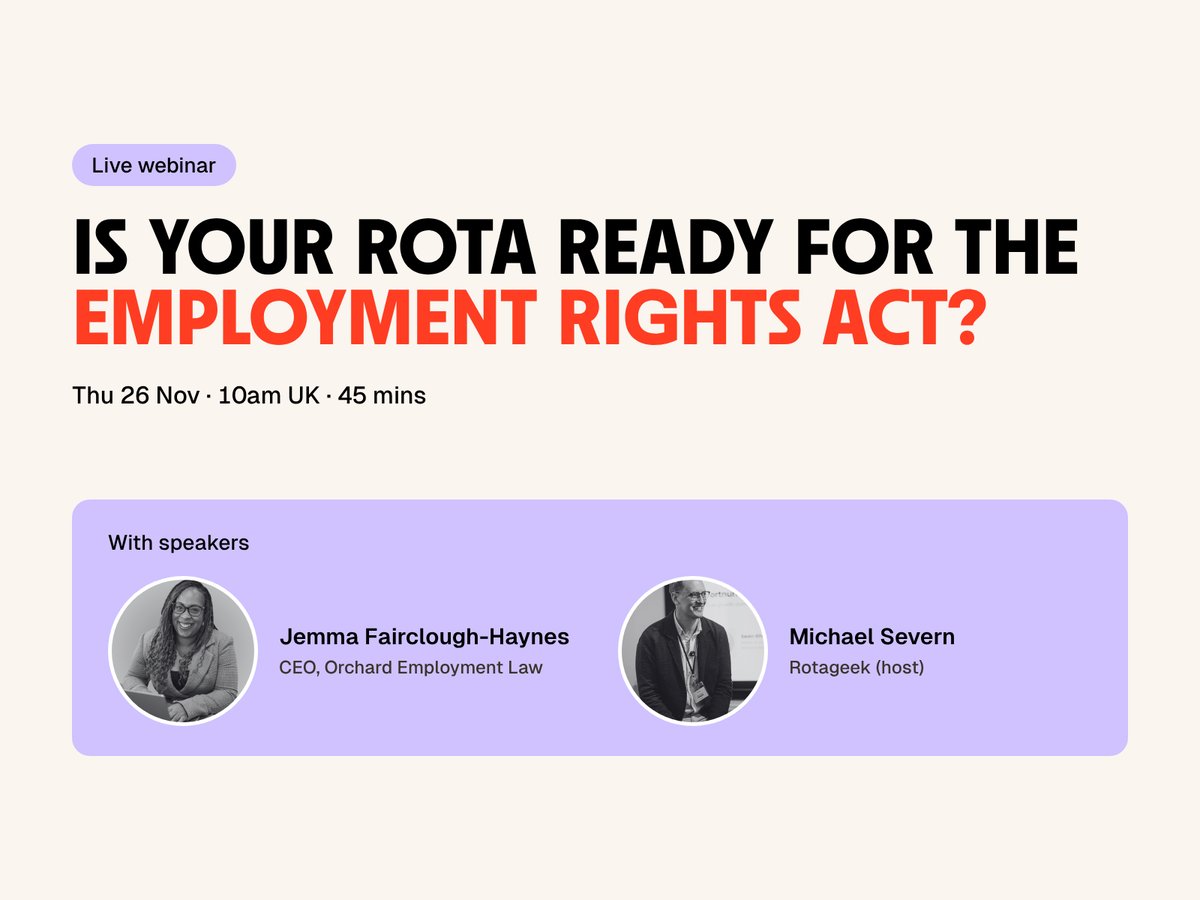
Is your rota ready for the Employment Rights Act 2025?
Employment law specialist Jemma Fairclough-Haynes walks through what's already changed, what 2027 brings and what the zero-hours reforms could mean for your rotas. Bring your questions.
Jemma Fairclough-Haynes, CEO, Founder and Employment Law Expert, Orchard Employment Law
Michael Severn, Enterprise Account Management, Rotageek
5 things to check before 2027
You don't need final dates to start. Each of these is useful whatever the regulations end up saying.
- Find your late changes. How often are shifts cancelled, moved or cut short, and at which sites?
- Compare contracts with reality. Look at contracted hours against hours actually worked, person by person.
- See how far ahead you publish. Note how many days' notice teams get today.
- Check your records. Make sure rota history, shift changes and absence data are easy to pull for at least 6 months.
- Review late and lone shifts. Who is on at closing time, and is anyone working alone?
Employment Rights Act 2025 FAQs
It's the biggest update to UK employment law in years. It became law on 18 December 2025 and brings in new rights in stages, from sick pay on the first day of absence to new rights for zero-hours and low-hours workers.
In phases. The first changes started in April 2026, more followed in October 2026, and the rest are timetabled between 1 January and December 2027. The rights to guaranteed hours, shift notice and short-notice pay don't have a date yet.
From 1 January, unfair dismissal protection starts after 6 months instead of 2 years, and tipping rules tighten. Fire and rehire protections follow in March. April brings bereavement leave and mandatory gender pay and menopause action plans for employers with 250+ employees (March for the public sector). NDA rules follow in September, and stronger pregnancy protection and flexible working changes in October. Separately, the National Living Wage rises to £13.21 an hour on 1 April 2027.
There's no date yet. They were originally planned for 2027, and Acas still lists them with the other 2027 changes, but the government says it will set timings after its consultation, which closed on 25 August 2026. We'll update this page as soon as a date is confirmed.
Yes. Most of the Act applies to every employer, including day-one sick pay, the harassment duty and the new unfair dismissal rules. The zero-hours rights are also expected to cover low-hours workers and agency workers, and to follow the hours people actually work rather than what their contract says.
In March 2027, moved from January. Dismissing someone for refusing a change to core terms, such as pay, hours or shift patterns, becomes automatically unfair in most cases. Acas says an updated Code of Practice to support the changes will be provided in 2027.
Start with your own data. Find how often shifts change at short notice, compare contracted hours with hours worked, note how far ahead rotas go out, and make sure rota and absence history is easy to pull. None of that depends on the final regulations.
It's the new government body that enforces workers' rights, set up on 7 April 2026. It covers rights such as holiday pay, the minimum wage and statutory sick pay, so holiday, hours and pay records are more likely to be checked.
No. It's general information, and dates can still change as regulations are confirmed. For your own situation, speak to an employment law adviser.
Sources
GOV.UK: Employment Rights Act timeline update (updated 5 November 2026)
Acas: Employment Rights Act 2025 guidance
GOV.UK: National Minimum Wage and National Living Wage rates
This page is general information, not legal advice. Dates can change as regulations are confirmed.
Get your rotas ready for 2027
See how Rotageek helps you publish rotas earlier, check contracted hours and keep every shift within your rules.