Zero-hours contract changes: what employers need to know
Zero-hours and low-hours workers are getting three new rights: guaranteed hours, reasonable notice of shifts and pay for late changes. Here's what each one means for your rota, and why tracking the hours people actually work is the place to start.
Last updated Tuesday 24 November 2026 · Checked against GOV.UK (5 November) and Acas (12 November) · No start date yet
Zero-hours contracts aren't being banned. The Employment Rights Act 2025 gives zero-hours workers, and low-hours workers whose contracts guarantee only a small number of hours, three new rights: guaranteed hours that reflect the hours they regularly work, reasonable notice of shifts, and a payment when a shift is cancelled, moved or cut short at short notice.
There's no start date yet. The detail, including who counts as low-hours, will be set in regulations after the government's consultation, which closed on 25 August 2026.
Zero-hours contract rights: three changes on the way
How do zero-hours contracts work after the changes? You can still offer them, but the hours people work and the notice they get will shape what you owe them.
-
Guaranteed hours
After a reference period, qualifying workers must be offered a contract that reflects the hours they regularly worked. They can accept it or stay as they are.
See how offers will work → -
Reasonable notice of shifts
Workers get a right to reasonable notice of shifts, and of changes to them. Regulations will set how much notice is presumed reasonable.
See what it means for your rota → -
Short-notice pay
Shifts cancelled, moved or cut short at short notice will mean a payment for the worker. Short notice can't be set at more than 7 days.
See how the payment works →
Guaranteed hours: how offers will work
This is the change with the most moving parts. The steps follow the government's consultation, so the numbers can still change.
-
01
Count the hours worked
Record the hours each in-scope worker works during a reference period. The government's preferred length for the first one is 12 weeks.
-
02
Check who qualifies
Zero-hours workers qualify if they worked regularly enough. Low-hours workers, guaranteed hours at or below a threshold the government would like to set at 8 to 20 a week, must also have worked more than their contracted hours.
-
03
Make the offer
Offer a contract guaranteeing hours that reflect those worked in the reference period. The worker can accept it, or stay on their current contract.
-
04
Start again
Further reference periods follow, possibly 12, 26 or 52 weeks long. Workers can qualify again if they said no, or if they keep working beyond new hours that are still at or below the threshold.
Why tracking hours actually worked is the hard part
Offers follow what people actually work, not what their contract says. If each reference period starts as soon as the last one ends, the consultation says employers must record every hour an in-scope worker works.
-
01
Worked, not planned
The rota shows the hours you planned. Swaps, extra shifts and late finishes mean the hours that count come from clock-ins and approved timesheets.
-
02
Contract against reality
You'll need contracted and worked hours side by side, person by person, to see who's at or below the threshold and who's working beyond it.
-
03
Every site in one total
People who pick up shifts at more than one site still have one total. Hours have to come together across the business, not site by site.
-
04
The counting never stops
Reference periods roll on, so the work doesn't end after the first 12 weeks. Agency workers are counted separately for each hirer.
Planned and worked hours, side by side
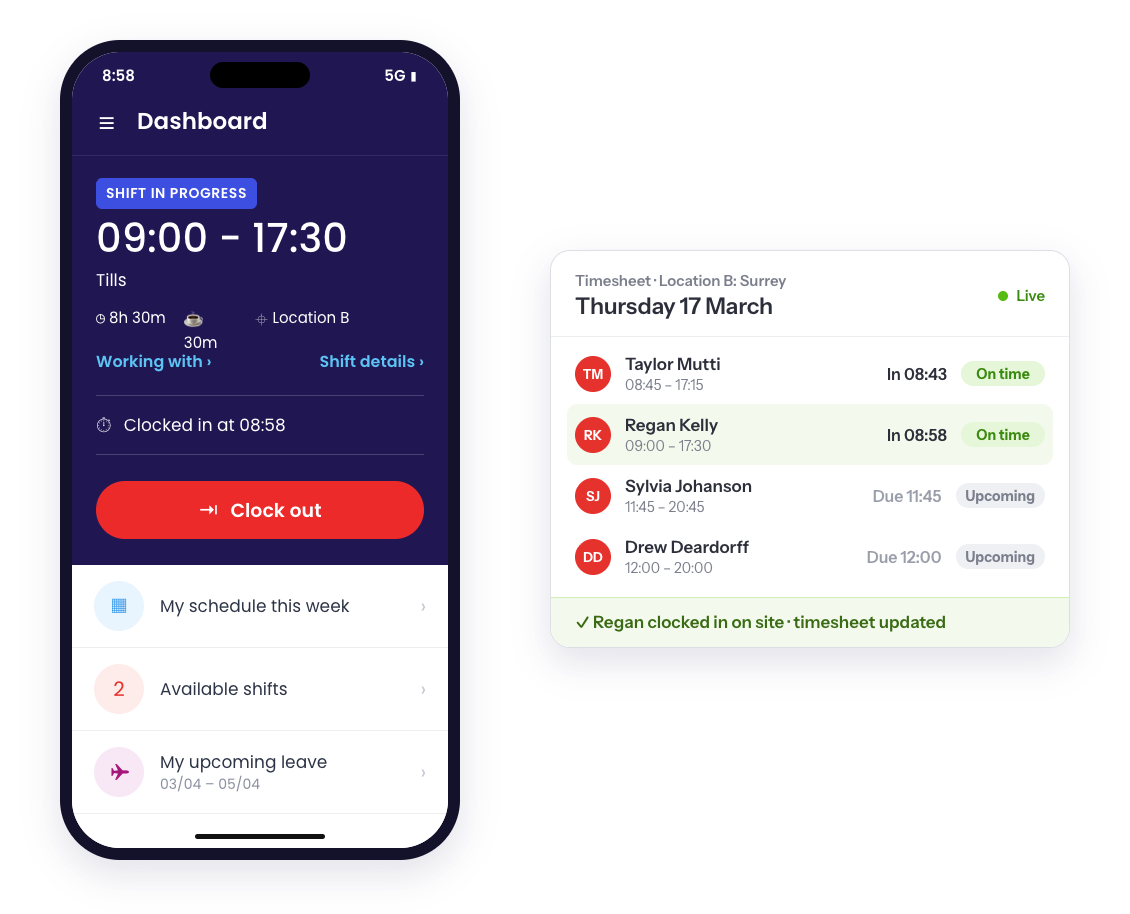
Rotageek keeps the hours you'll need in one place, from the rota to the timesheet.
- Hours against contract as you build. Each person's hours add up against their contract and maximum as you add shifts.
- Clock-ins against the planned shift. Staff clock in on the app, a shared device or a connected clock, and it lands on their timesheet.
- Worked hours ready to check. Approved shifts land on the timesheet with their clock-in times, so planned and worked hours sit side by side.
Zero-hours contract notice period: reasonable notice of shifts
Zero and low-hours workers will have a right to reasonable notice of shifts, and of any changes to them. There won't be one fixed period: regulations will set a presumed reasonable notice period, and tribunals will look at the circumstances of each case.
The consultation asked whether that presumption should be 1, 2, 3 or 4 weeks for directly employed workers. Whatever is chosen, the date your rota goes out becomes something to measure.
- Find out how many days' notice each site gives today.
- Publish further ahead, and keep later changes to a minimum.
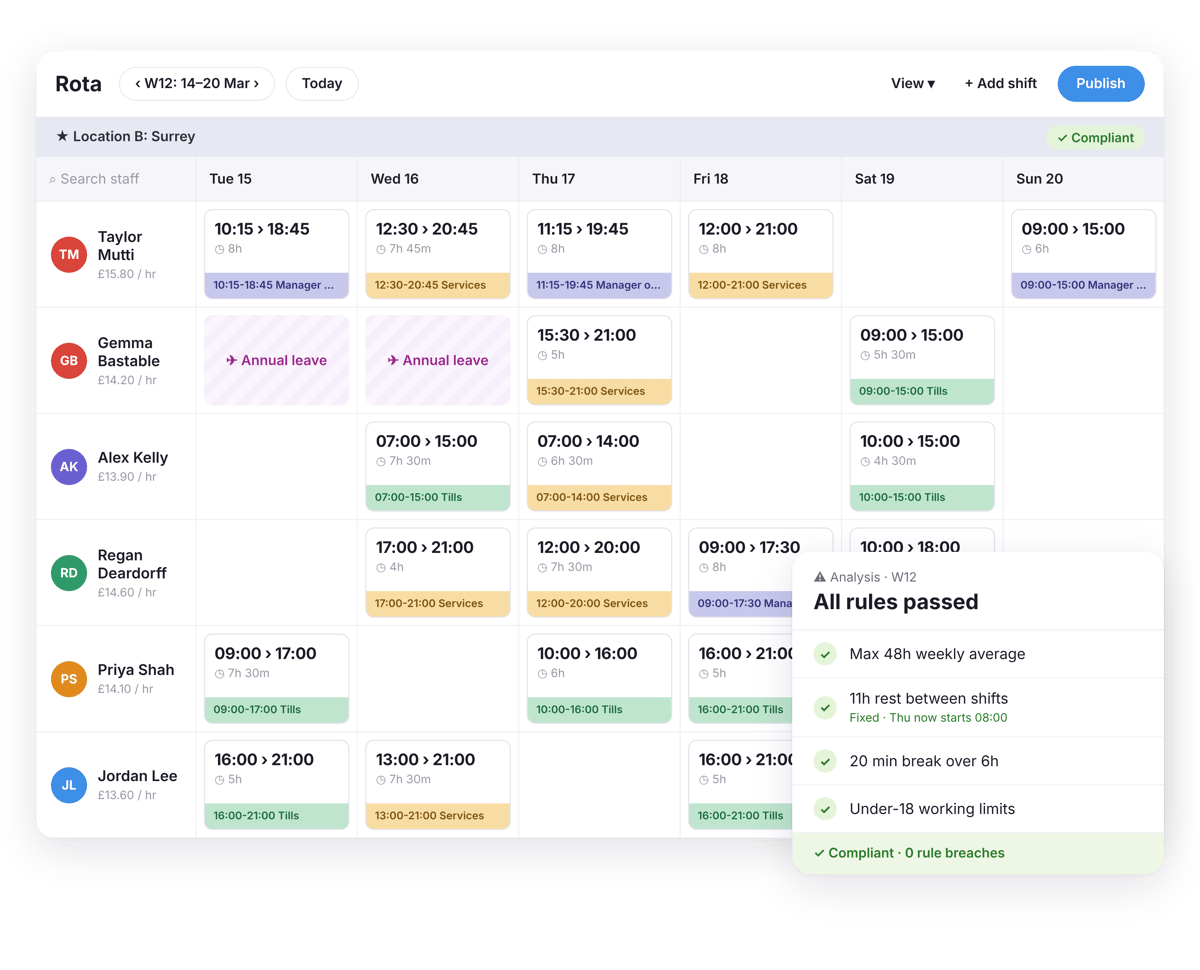
- Keep a record of when shifts were published and changed.
Where Rotageek helps: forecasts built on your own sales, transactions or footfall help managers plan for the demand they expect. Changes stay in draft until you approve the rota, then only people with new or changed shifts get a notification.
Short-notice pay for cancelled, moved or cut shifts
When a shift is cancelled, moved or cut short at short notice, the worker will be owed a payment. The Act caps the short-notice window at 7 days, and the payment can't be more than the worker would have earned from the shift.
The consultation asked about payments from 10% to 80% of those earnings, and about a separate, very short notice window with a higher rate. None of it is confirmed yet.
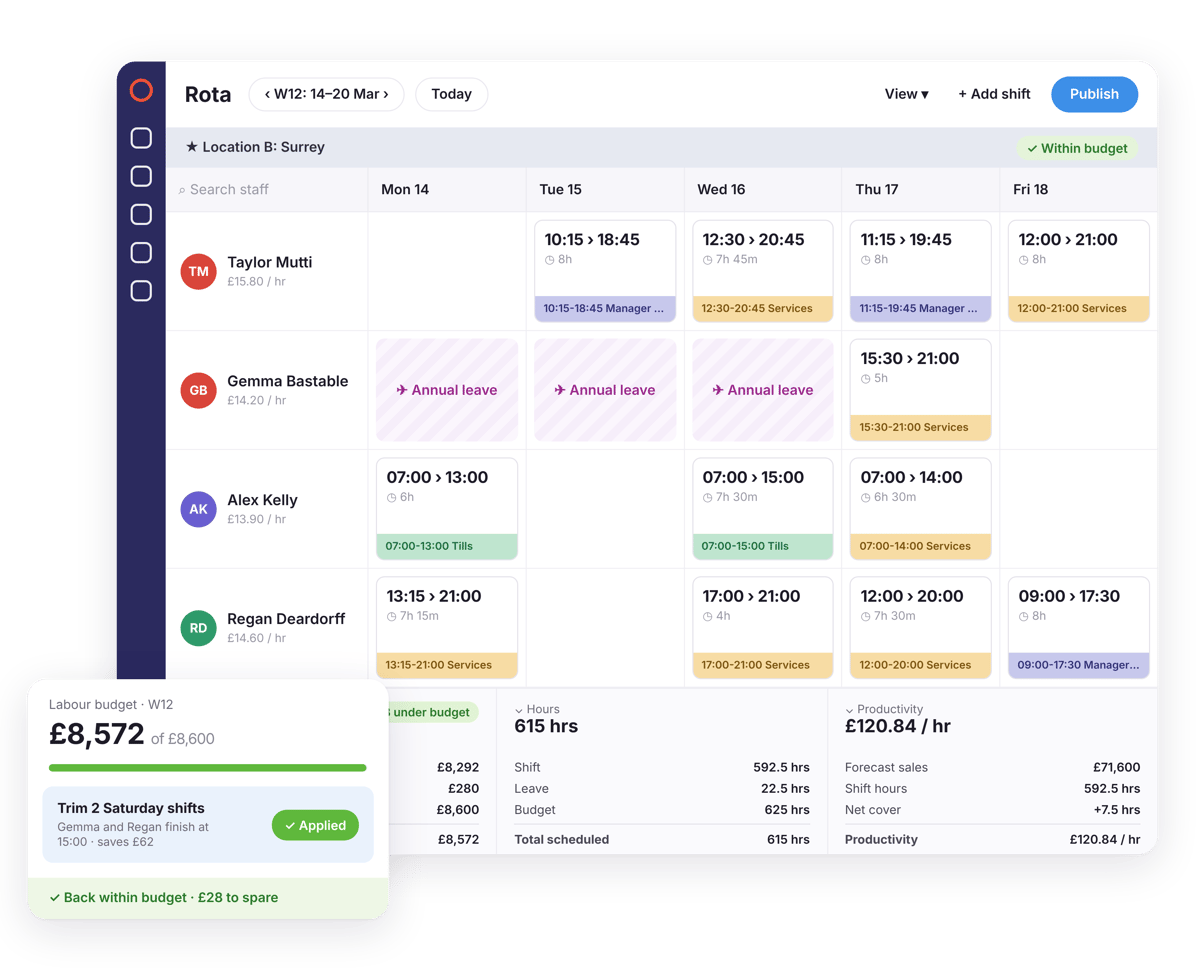
Where Rotageek helps: fewer late changes start with a better forecast. When the demand you plan for is closer to the demand you get, fewer shifts need moving.
What could late shift changes cost you?
Eight quick questions, one ballpark figure. Our free calculator estimates what short-notice pay could add up to across your sites.
Zero-hours contract rights that already apply
The new rights add to what zero-hours workers already have. The Fair Work Agency, set up on 7 April 2026, now enforces rights such as holiday pay and sick pay.
-
Paid holiday
Zero-hours workers get up to 5.6 weeks' paid holiday a year. Since leave years starting on 1 April 2024, irregular-hours workers build it up from the hours they've worked.
-
Sick pay from day one
Since 6 April 2026, statutory sick pay starts on the first day of illness, and there's no minimum earnings level to qualify.
-
Holiday records for 6 years
Since 6 April 2026, employers must keep records of annual leave and holiday pay for at least 6 years.
-
Free to work elsewhere
You can't stop zero-hours workers looking for or taking work with another employer. They can ignore a contract clause that tries to.
When do the zero-hours contract changes start?
There's no start date yet. The rights were originally expected in 2027, but the government's timeline update of 22 October 2026 says timings will be set after the consultation.
That consultation ran from 2 June to 25 August 2026, and the government is still analysing the responses. We'll update this page as soon as a date is announced.
Want every other Employment Rights Act date in one place? See the employment law changes timeline.
More on the Employment Rights Act
Zero-hours rights are one part of a bigger set of changes. Here's the rest, and what to do about it.
-
Every change, date by date
What's already in force, what lands in 2027 and what's still waiting for a date.
See the employment law changes → -
What it means for shift operations
How the 2026 and 2027 changes affect rotas, sick pay and guaranteed hours.
Read the shift operations guide → -
Why forecasting matters now
Fewer late changes and earlier rotas start with knowing the demand you'll get.
Read why forecasting matters → -
Every hour costs more from April
The National Living Wage rises to £13.21 an hour on 1 April 2027.
Plan for the wage rise →
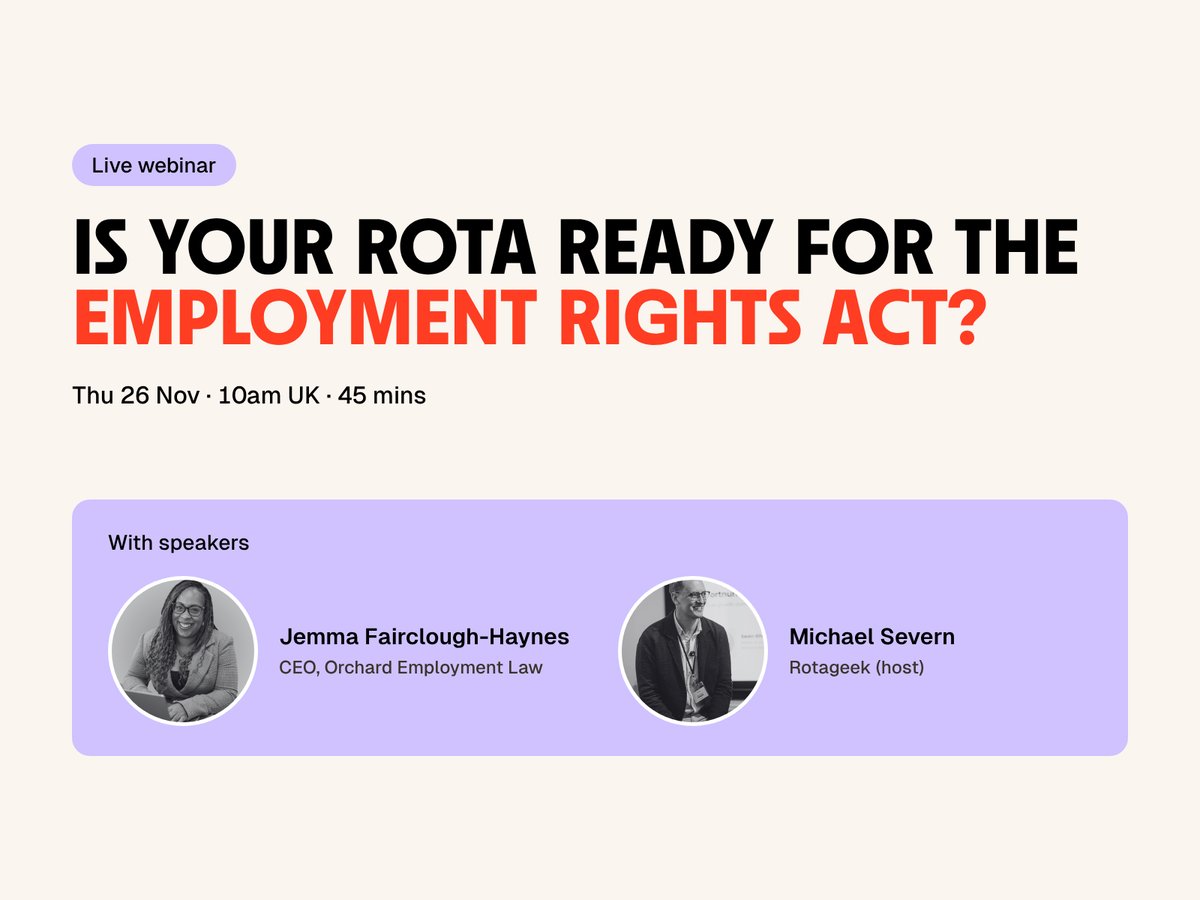
Is your rota ready for the Employment Rights Act 2025?
Employment law specialist Jemma Fairclough-Haynes walks through what's already changed, what 2027 brings and what the zero-hours reforms could mean for your rotas. Bring your questions.
Jemma Fairclough-Haynes, CEO, Founder and Employment Law Expert, Orchard Employment Law
Michael Severn, Enterprise Account Management, Rotageek
Zero-hours contract changes: your questions answered
No. Employers can still use them, but zero-hours and low-hours workers will gain rights to guaranteed hours, reasonable notice of shifts and payment for late changes.
A contract that sets out the hours the employer must provide and the worker must work. Under the Act, qualifying workers must be offered one that reflects the hours they worked during a reference period, and they can turn it down.
Someone whose contract guarantees hours at or below a threshold that regulations will set. The government prefers a threshold of between 8 and 20 hours a week, and to qualify for an offer a low-hours worker must also have worked more than their contracted hours.
There isn't a fixed one yet. Workers will have a right to reasonable notice of shifts and changes, and regulations will set a presumed period: the consultation asked about 1 to 4 weeks.
That's still to be confirmed. The payment can't be more than the worker would have earned from the shift, and short notice can't be more than 7 days. Our short-notice shift change calculator lets you test different assumptions.
Yes. The hirer will make guaranteed hours offers, based on the hours the agency worker worked for that hirer. Agency workers are covered by the notice and short-notice pay rights too, with the details still to be set.
There's no date yet. They were originally expected in 2027, but the government will set timings after its consultation, which closed on 25 August 2026.
Yes. They get up to 5.6 weeks' paid holiday a year, built up from the hours they work, and since 6 April 2026 statutory sick pay from the first day of illness with no minimum earnings level.
In some cases. The Act lets employers and trade unions agree tailored terms through a collective agreement, and the consultation says that can include opting out of the guaranteed hours duty.
Through employment tribunals. A worker who qualifies for a guaranteed hours offer and doesn't get one, or who isn't given reasonable notice, will be able to make a claim.
Start with your own data: compare contracted hours with hours actually worked, check how far ahead rotas go out and find where late changes happen. Then plan from a demand forecast, publish earlier and check each rota against your working time rules before you approve it.
No. It's general information based on GOV.UK and Acas guidance, and the details can change as regulations are confirmed. For your own situation, speak to an employment law adviser.
Where these facts come from
- GOV.UK: Plan to Make Work Pay and Employment Rights Act timeline update (updated 5 November 2026)
- GOV.UK: Ending one-sided flexibility, reforms of zero hours and similar contracts (consultation, 2 June to 25 August 2026)
- GOV.UK: Consultation document (PDF: thresholds, reference periods, notice and payment options)
- Acas: Employment Rights Act 2025 (updated 12 November 2026)
- GOV.UK: Zero-hours contracts (employer responsibilities)
- GOV.UK: Holiday entitlement
This page is general information, not legal advice. Details can change as regulations are confirmed.
Got questions? Speak to a geek
Whether it's tracking hours worked, publishing rotas earlier or cutting late changes, our team is happy to talk it through. No hard sell, just practical answers.