Inside Fortnum & Mason's workforce overhaul
by Amy Rosoman on 30 September 2026
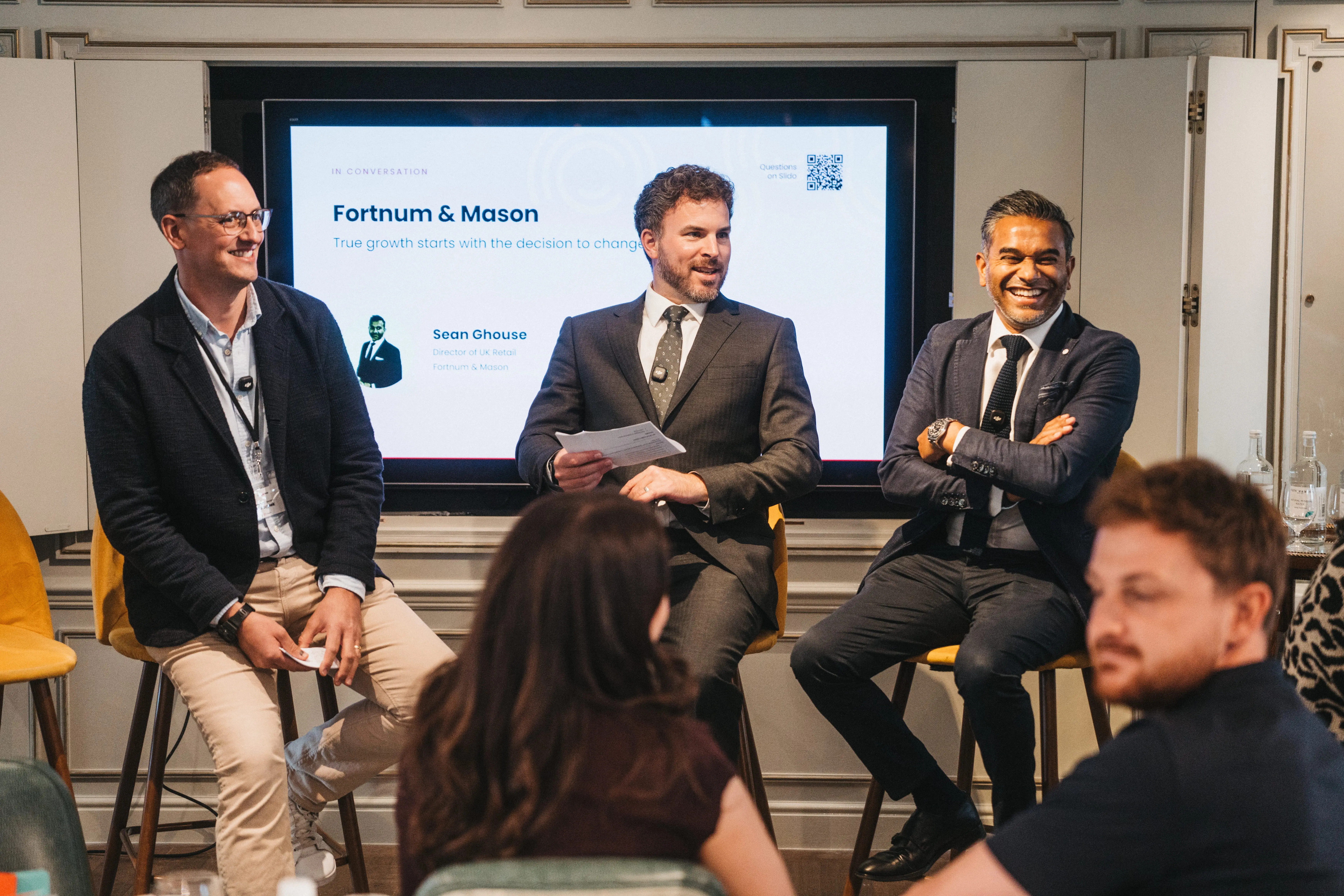
Fortnum & Mason has been trading since 1707, and very little about the business has needed to change in that time. So when Sean Ghouse, Director of UK Retail at F&M, and James Blackbrough, Head of Retail at F&M, sat down to talk about how the retailer modernised its workforce planning, the conversation kept circling back to one idea: this wasn't about disruption. It was about giving people back their time, and the story of how they got there is a genuinely good one.
Three Hundred Years of Tradition. One Quiet Workforce Revolution. That's the story Fortnum & Mason brought to The Shift 2026, Rotageek's customer event, a session dedicated to the honest, unpolished realities of workforce management today.
Skip to:
The problem hiding in plain sight
What actually changed for everyone
What's next: growing the craft
Fortnum & Mason: An inside look into the iconic store
Watch the full customer panel discussion
Featuring first-hand insights from retail and workforce leaders at Fortnum & Mason
Watch on-demand
The problem hiding in plain sight
When Sean Ghouse joined Fortnum & Mason, he asked a simple question: how does each store actually manage its schedules? The answer surprised him.
"I discovered not only were we using Excel, which pretty much everyone was, but it was different templates, different formats, different colours, different codes. It didn't make sense across every floor, let alone across every single store."
The inconsistency went deeper than formatting. Notice periods for rotas varied from a week to just a few days depending on the store, which meant staff couldn't plan their lives around their schedules. Managers, meanwhile, found themselves rewriting rotas at the last minute so often that the team had a name for it: "version 5.0 of the rota."
James Blackbrough, Head of Retail at Piccadilly, remembers the same frustration from a different angle, watching the business grow while the tools underneath it stayed stuck:
"We had different stores, some sending rotas out with a week's notice, some with just days' notice. It's like, how can we align and bring all that together so that it's fair across everybody, and it actually works properly for the business, the store, and the team?"
Fortnum & Mason today spans its Piccadilly flagship, regional stores, and a team based at Heathrow, bringing together some of the most experienced and specialised retail teams in the UK. Any change had to work across all of it without flattening the real differences between, say, a Piccadilly floor team and the airport operation.
Change without disruption
That's largely why the team didn't force a single, big-bang rollout. Instead, the approach had four strands running alongside each other, each one deliberately low-risk before the next began:
- Aligning without flattening. Scheduling rules were harmonised across stores, while still listening to how individual locations, like Heathrow, genuinely operate differently.
- Leading with transparency. Managers and teams were told upfront what the change would actually save them time on, and how it would work, before being asked to adopt anything.
- Starting small. App-based clocking in and holiday booking came first: simple, low-risk wins that built trust before anything more complex followed.
- Taking auto-scheduling slowly. Only once the basics were solid did the team move on to the harder, more valuable work of automating scheduling itself.
James Blackbrough was candid about why the timing of all this mattered as much as the plan itself:
"If we tried to do this before Covid, I think we would have had a very different result."
Teams had already grown comfortable using technology in daily life by the time the change arrived, making it a much easier ask than it would have been a few years earlier.
Sean Ghouse credits much of the project's success not to any single decision, but to the culture the team built around listening:
"The success has come from the floor, from operators. What we've got is a team that's willing to listen, to hear, to be curious, to understand from the people that live and breathe it at the coalface what this system needs to do."
What actually changed for everyone
The results, once they landed, touched almost everyone differently.
For the business, real-time visibility into payroll replaced the old routine of waiting until month-end to find out whether a store had overspent. As James Blackbrough put it, describing the shift:
"We're used to always having to wait until the month had finished to see any sort of payroll result, so it was always a bit nervous, have I overspent, don't know what I've spent. This will give us the ability to do a period review of spend and payroll, and that unlocks a lot for managers."
For managers, schedules are now visible weeks in advance, holiday requests can be booked from a phone, and clocking in no longer depends on a machine sitting on the shop floor.
For colleagues, the change was more personal, and this is the part Blackbrough lights up talking about:
"It just makes life easier for them, having their schedules ahead, they can just go on their phone and check what they're working, weeks ahead."
But it's Sean Ghouse's own reflection that captures why this mattered so much to a business built on people, not just process:
"Our biggest asset is our teams that are facing our customers. Giving them the time to plan properly, to see loved ones, go to weddings, live their lives outside of work, really does help the overall culture."
What's next: growing the craft
Fortnum & Mason's transformation isn't finished, and by design, it may never quite be. The team is now exploring skills-based flexibility, looking at how specialists across tea, fragrance, and hospitality might flex and grow into other areas without losing the depth of craft the business is known for.
Sean Ghouse is optimistic about what that unlocks, both for the business and for the people who make it what it is:
"We've got so many experienced people and the craft of what we do in different departments. If I can see a gap that someone wants to go and cover another area, how can I invest in their skill sets if they want to grow themselves in retail?"
Reflecting on how far the process has already come, and what it took to get the details right, Ghouse offered the line that sums up the whole approach:
"If you've never worked on the shop floor, you're never going to get it."
The takeaways
- You don't need to disrupt to modernise. Fortnum & Mason changed one of its oldest habits without touching what makes the brand distinctive, proof that tradition and technology aren't opposites.
- Sequencing builds trust. Starting with clocking in and holiday booking, before touching auto-scheduling, gave teams small wins to believe in before asking for something bigger.
- Timing matters as much as the plan. Doing this after Covid, when people were already comfortable with everyday tech, made the whole rollout land more easily than it might have a few years earlier.
- Visibility changes behaviour, not just reporting. Real-time payroll data didn't just make month-end easier, it gave managers the confidence to make better decisions in the moment.
- The best return isn't always the one you planned for. Skills-based flexibility wasn't the original goal, it emerged once the basics were solid, and it may end up being the most valuable part of the whole journey.
Fortnum & Mason's story is a genuinely hopeful one for any business that assumes its heritage is a reason to stand still. Sometimes protecting what makes you special starts with fixing the things that were quietly making life harder for the people delivering it.
-
Why did Fortnum & Mason change how it manages workforce scheduling?Even though Fortnum & Mason has traded since 1707, its rotas were still being built by hand in Excel, with different formats and rules in every store. The inconsistency made it hard for staff to plan their lives and for managers to keep up, so the retailer set out to fix the process itself, without changing what makes the brand distinctive.
-
What problems did the old system cause for staff and managers?Notice periods for rotas varied from a week to just a few days, depending on the store, and managers were rewriting schedules so often the team nicknamed it "version 5.0 of the rota." The inconsistency made it genuinely difficult for colleagues to plan their lives around work.
-
How did Fortnum & Mason roll out new workforce technology without disrupting its teams?Rather than one big rollout, the team took a phased approach: aligning scheduling rules across stores while still respecting real differences between locations, being transparent with managers from the start, and starting with simple wins like app-based clocking in and holiday booking before tackling auto-scheduling.
-
What changed for managers and colleagues after the rollout?Managers gained real-time visibility into payroll instead of waiting until month-end to find out if they'd overspent, and colleagues could see their schedules weeks in advance and book holiday from their phone. The biggest win, according to leadership, was giving people back the time to plan their lives outside work.
-
What's next for Fortnum & Mason's workforce strategy?The team is now exploring skills-based flexibility, looking at how specialists in areas like tea, fragrance and hospitality could grow into new roles without losing the depth of craft the business is known for.